It’s fun to learn about shapes when youngsters learn about them thru play, movement, art, and common things. Shape Activities for Preschoolers are a fun method to help young children learn to recognize basic shapes including circles, squares, triangles, rectangles and more. These exercises also encourage observation, matching, sorting, creativity and fine motor skills.
Shape Activities for Preschoolers make early learning exciting with puzzles, drawing, building blocks and classroom activities to help youngsters grasp how forms exist in their surroundings at home and in school.
Why Shape Activities Matter for Preschoolers?
- Shape activities are a great way for children to recognize circles, squares, triangles, and rectangles thru distinct visual patterns.
- Children develop observation skills by comparing sizes, sides, corners.
- Matching, sorting and building with shapes develop problem-solving and logic.
- Learning the names of shapes builds vocabulary and helps kids to describe items more confidently.
- These exercises helps to develop early maths skills like as classification, sequencing, counting and spatial awareness.
- Children become aware of shapes in everyday life such as round clocks, rectangular doors, triangular roofs and square windows.
- Learning thru consistent practice is entertaining, practical and easy to recall when working in the classroom and at home.
Fun Shape Activities for Preschoolers
Fun shape activities help preschoolers recognise circles, squares, triangles, rectangles, and other basic forms through hands-on learning.
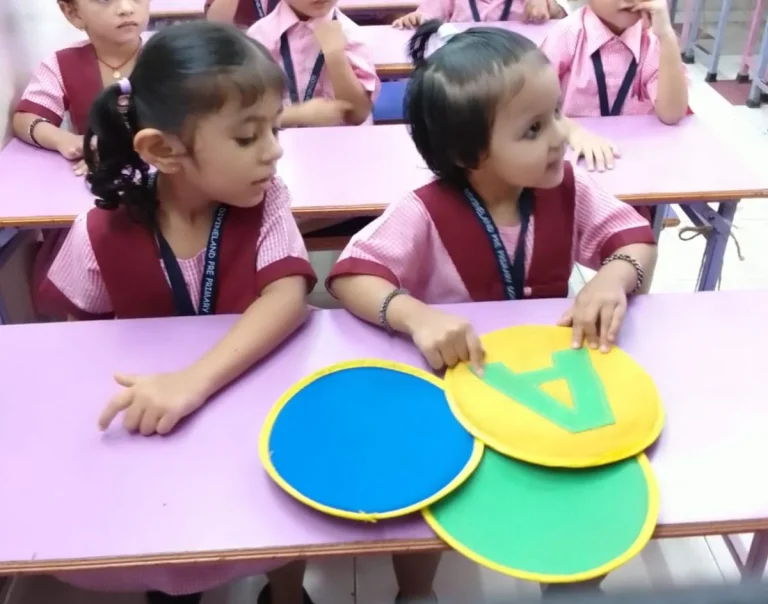
- Shape Sorting: Give kids mixed cut-outs and ask them to place same shapes together.
- Matching Games: Use cards with identical shapes and inspire children to find the correct pairs.
- Shape Tracing: Let children trace shapes using crayons, pencils, or finger movements on sand trays.
- Clay Modelling: Ask children to roll and press clay to create different shapes.
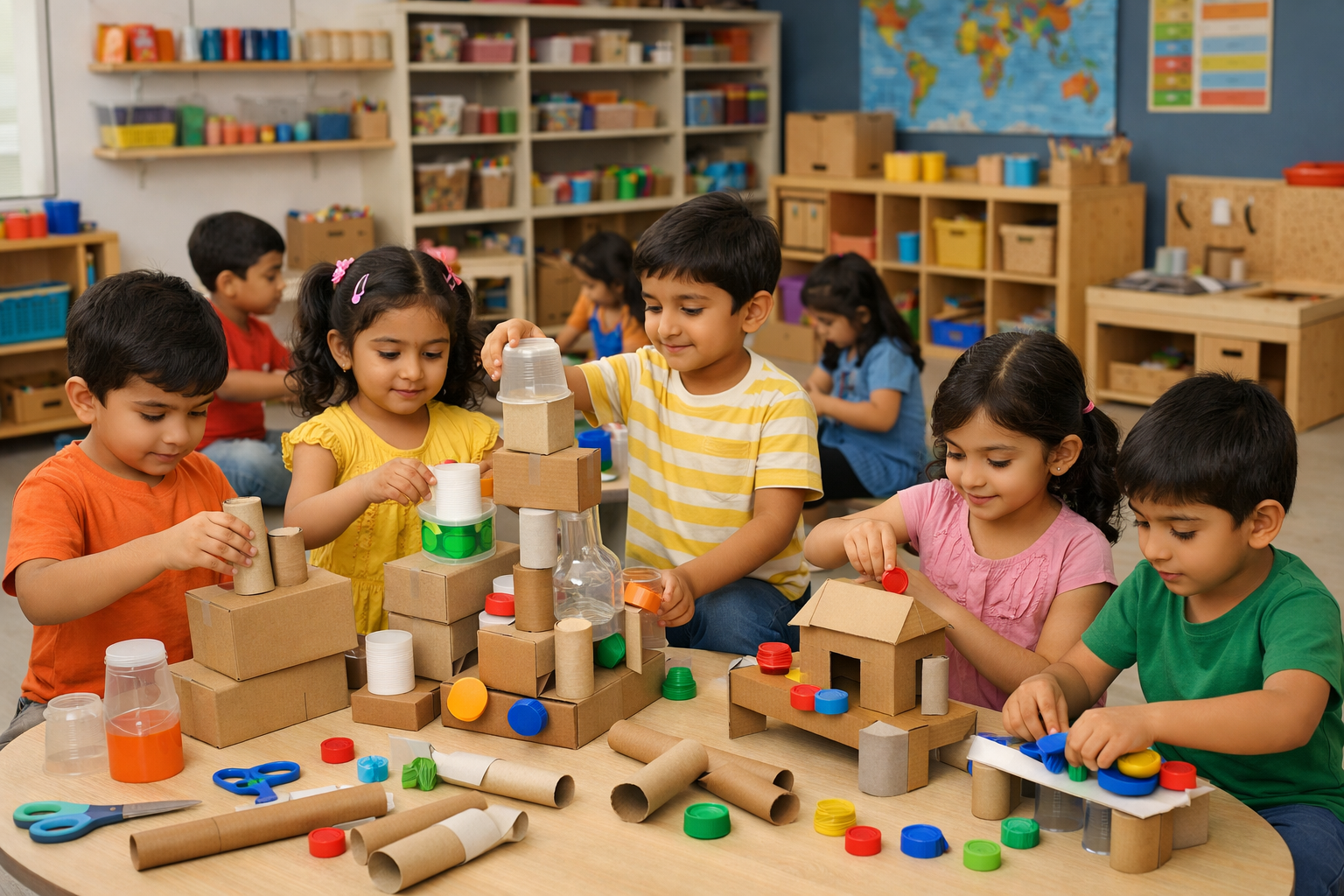
- Block Building: Provide building blocks and encourage children to make towers, houses, or simple patterns.
- Shape Puzzles: Use age-appropriate puzzles to improve observation, concentration, and problem-solving skills.
- Classroom Shape Hunt: Ask children to identify shapes in windows, tables, clocks, books, and doors.
Teachers can repeat these games and praise children for recognising and naming shapes correctly during each activity.
These activities make shape recognition enjoyable while building fine motor skills, visual memory, creativity, and early mathematical understanding.
This can also be adapted into a simpler parent-focused or teacher-focused version.

Shape Activities Using Everyday Materials
Shape activities need not be expensive toys, or even unique educational materials. Young children can be taught to identify shapes with everyday objects and acquire skills of creativity, coordination and problem solving.
- Paper Plate Faces: Take paper plates and cut them into circles, semi-circles or triangles. Children can make eyes, noses and lips with crayons or colored paper.
- Bottle Cap Sort Gather some clean bottle caps. Encourage children to sort them by shape, color or size and to create simple patterns.
- Cardboard Shape Puzzles – Cut out squares, rectangles, circles, and triangles from old cardboard boxes. Trace each shape onto a separate sheet and have the kids match the shapes.
- Ice-Cream Stick shapes: Have fun with ice-cream sticks and build squares, rectangles, triangles, houses, stars and basic forms. Enhances fine motor skills.
- Colored Paper Collage: Cut pieces of colored paper in different shapes. They can be used to make creatures, cars, flowers or buildings.
- Household Shape Hunt: Kids seek around the room for round plates, rectangle books, square cushions and other shapes.
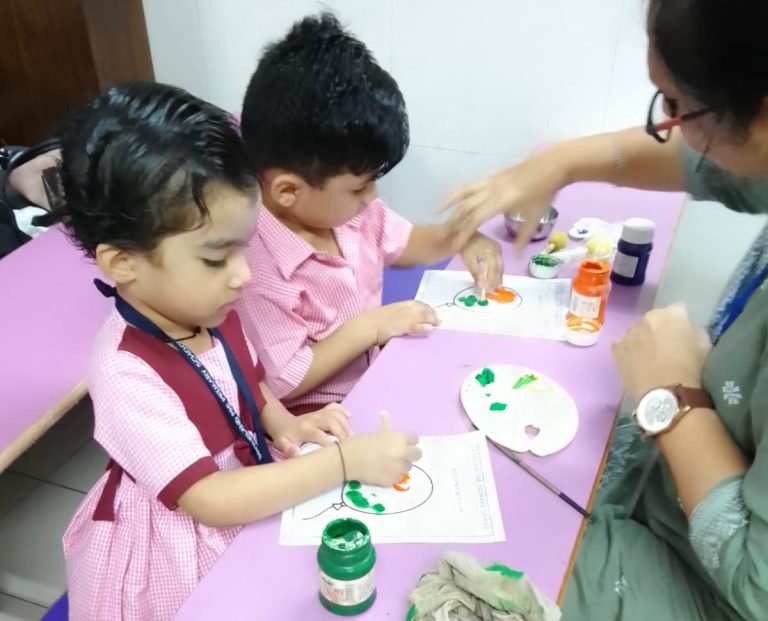
- Print with Recyclable Materials: just dip bottles, cardboard rolls or lids of containers in paint and press on paper.
These activities are low cost, fun and meaningful and give youngsters a means to reliably identify shapes in everyday life, making learning shape doable.
Tips for Teaching Shapes Effectively
Teaching shapes becomes easier when children learn through simple, playful, and repeated experiences during regular lessons.
- Introduce one shape at a time: Start with familiar shapes such as circles, squares, and triangles before adding rectangles, ovals, and other forms.
- Use songs and rhymes: Help children remember shape names and features. Actions and hand movements can make learning more engaging.
- Include short stories: Use shape characters or objects and ask children to identify the shapes they notice in pictures.
- Repeat activities regularly: Matching, sorting, tracing, colouring, and building games strengthen shape recognition and memory.
- Ask thoughtful questions: Questions such as, “Where can you see a circle?” encourage observation, communication, and thinking.
- Connect shapes with objects: Show shapes through clocks, windows, doors, plates, and road signs.
- Appreciate every effort: Positive words, stickers, or applause build confidence and encourage participation without creating pressure.
Enroll your child at Divineland Pre Primary School for fun shape learning today!
To enroll your child in DPPS, Call or Whatsapp on +919082778593 / +918591021373.
Click Here, to download the brochure!
FAQs
Which Shape Activities are Suitable for Preschoolers?
Teachers can use shape hunts, sorting games, clay models, puzzles, drawing and object matching to make shape learning enjoyable, practical and easy for every young child at school.
How does Divineland Teach Shapes to Preschoolers?
Divineland Pre Primary School uses engaging shape activities, classroom objects and creative tasks to help children identify shapes and apply their learning in everyday situations.