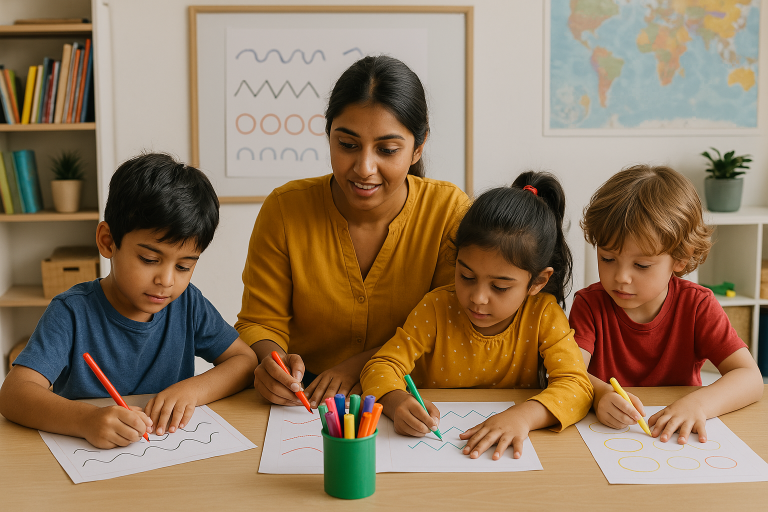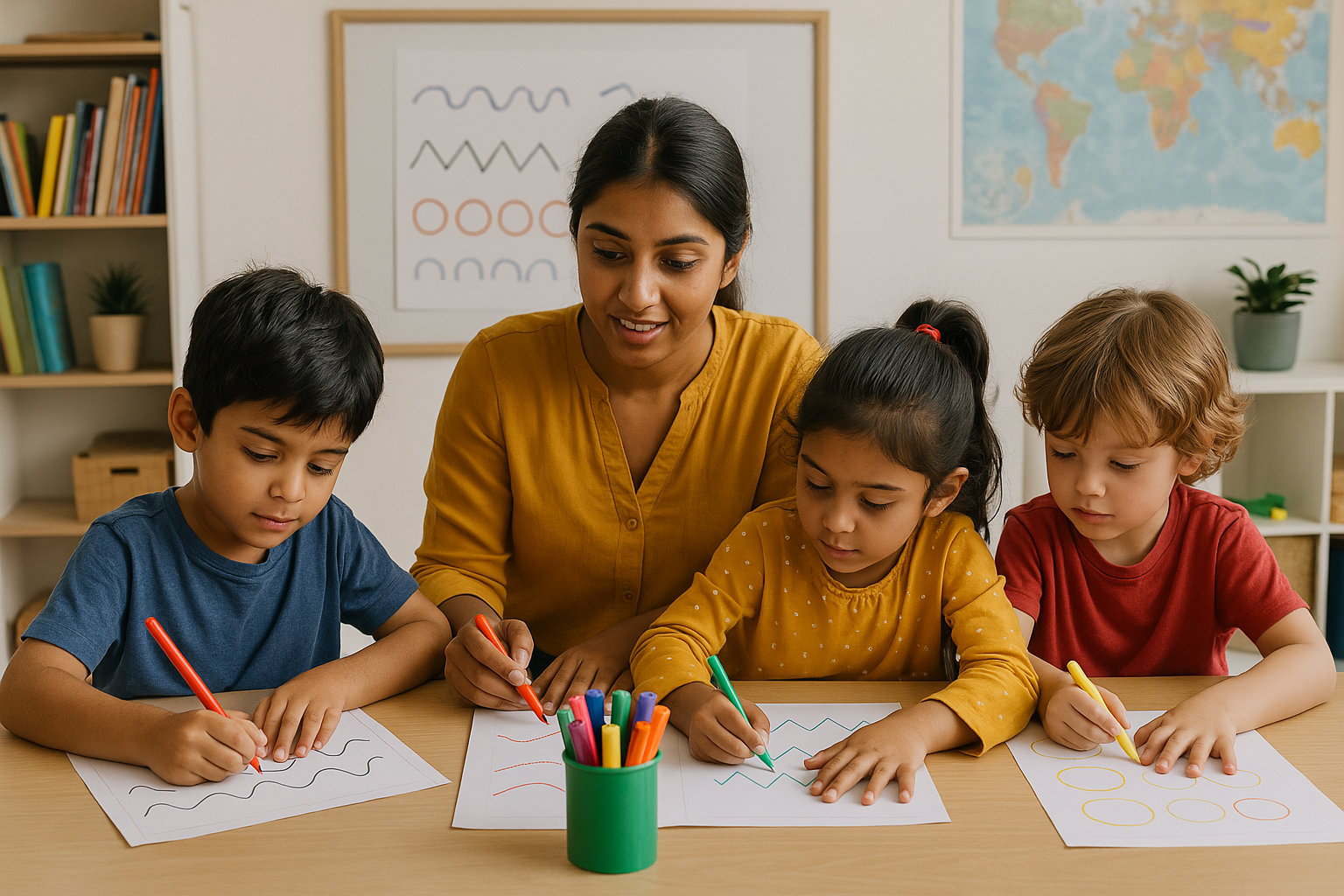
Handwriting is a key ability that supports children in expressing their thoughts properly and with confidence. Good writing habits formed while you are young can increase neatness, speed, letter formation and overall presentation. Handwriting Improvement for youngsters needs regular practice, right pencil grip, suitable sitting position and simple writing tasks that improve hand and fingers muscles.
Parents and instructors may help youngsters by making practicing fun and free of stress. Handwriting Improvement can help youngsters write more legibly, feel confident in their work and do better in everyday school activities – given time and the correct instruction.
Why Good Handwriting Matters?
Handwriting is a vital part of a child’s learning and daily education. Writing that is clear and neat will help teachers and peers understand what the youngster has written. It also aids students in the presentation of their ideas in an organized way.
Good handwriting can help youngsters by:
- Enhancing the clarity of written work
- Helping them to do classwork and homework neatly
- Improving the comprehensibility of written answers
- Enhanced presenting support in tests and assignments
- Building confidence in writing tasks
With consistent practice, students can improve their handwriting habits and feel more comfortable when they are doing classroom activities.
Call or Whatsapp on +919082778593 / +918591021373, Admission Details!
For downloading the brochure, Click Here!
Common Handwriting Problems
Many youngsters have issues with handwriting in their early learning years. These issues can impact on the neatness, quickness of writing and confidence to complete assignments. If the problem is found early, parents and teachers can give the necessary support.
Common handwriting issues include:
- Poor Letter Formation: Children may reverse the direction of the letters or confuse similar-looking letters.
- Uneven Spacing: Words and letters can be too close together or too far apart.
- Pencil Grip: If your child is Holding the Pencil too tightly or in the wrong way it can be uncomfortable and they will not have good control.
- Slow Writing Speed: Some students need more time to do written assignments and may have difficulty keeping up in class.
- Inconsistent Font Size: Letters may be too huge, too small, or varying sizes within the same word.
- Writing on the Lines is Hard: Children may write above, below or across the ruled lines.
These problems in handwriting can be improved gradually by simple advice and regular practice.
Handwriting Improvement Activities
If youngsters have interesting tasks to complete it is simpler for them to improve handwriting. Build your hand muscles with regular practice to improve pencil control and create better letter formation.
- Tracing Activities: By tracing letters, numbers, shapes and simple sentences, children understand the correct writing patterns.
- Pattern Writing: Writing lines, curves, loops, zigzags and circles will promote hand mobility and control.
- Dot-to-Dot Activities: It foster hand-eye coordination and get toddlers ready to write letters properly.
- Copy Short Sentences: Short sentences are useful for children to learn space, size, alignment and speed of writing.
- Handwriting Worksheets: The worksheets offer methodical practice on alphabets, words and sentences.
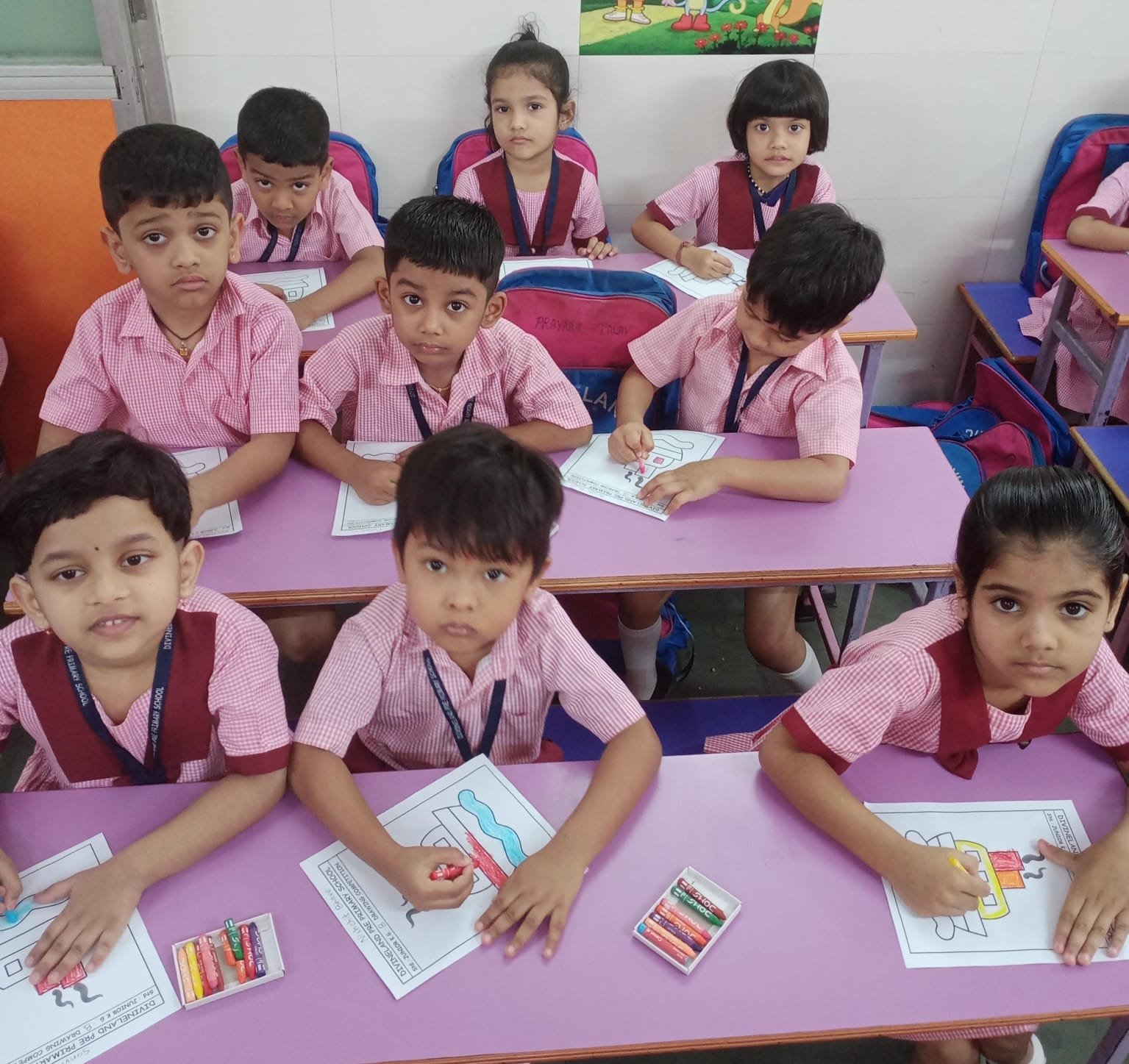
- Colouring Activities: Colouring within boundaries helps understanding, concentration and fine motor abilities.
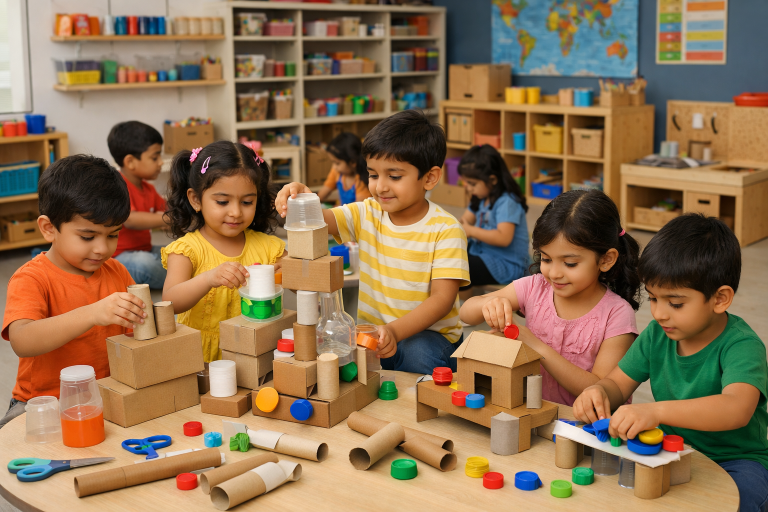
- Fine Motor Exercises: Activities like as clay modelling, shredding paper, threading beads and using tongs help build finger muscles.
These simple activities will help make handwriting practice more successful and interesting for kids.
Tips for Better Handwriting
Good handwriting is the result of practice, of good habits, of meticulous guidance. Parents and teachers may make handwriting practice simple by concentrating on a few simple approaches.
- Correct Sitting Posture: Children should sit upright with their feet supported and the notebook resting comfortably on the table. Good posture makes it easier to regulate your writing.
- Correct Pencil Grip: Show children how to hold the pencil with a light grip, utilizing the thumb, index finger, and middle finger. A loose grip will help with hand fatigue.
- Practice Regularly: Better short yet everyday practice sessions than long and demanding ones. It can be useful to trace, to copy words, and to write little sentences.
- Select Appropriate Writing Tools: Select pencils, notebooks and worksheets appropriate for the child’s age and hand size.
- Encourage without Pressure: Focus on mistakes made by kids. Children gain confidence and love practicing handwriting with positive encouragement.
Handwriting Improvement for Kids is made simple with consistent practice, caring coaching and the ideal learning environment. Parents who want to instill a firm foundation of early writing skills in their kid should choose admission to Divineland Pre Primary School, where children develop important intellectual and motor abilities through age-appropriate learning activities.
Enroll your child at Divineland Pre Primary School for better handwriting skills!
Call or Whatsapp on +919082778593 / +918591021373, Admission Details!
For downloading the brochure, Click Here!
Handwriting Improvement for Kids
FAQs
What Activities Help with Handwriting Improvement for Kids?
Stronger hand muscles can help to improve handwriting and these can be developed by activities including tracing, coloring, joining the dots, pattern writing, playing with clay and fine motor exercises.
Does Divineland Pre Primary School Support Handwriting Development?
Yes. The Divineland Pre Primary School offers appropriate writing and motor-skills activities to encourage children to develop improved handwriting skills.