Understanding Singular and Plural Rules is an important step in building strong language skills for young learners. Singular and Plural Rules help children learn how to change words when talking about one or more than one person, place, or thing.
When children clearly understand Singular and Plural Rules, they become more confident in speaking and writing simple sentences. These rules may seem basic, but they play a big role in early grammar learning and everyday communication.
What is Singular and Plural?
Before learning Singular and Plural Rules, children should understand the basic idea:
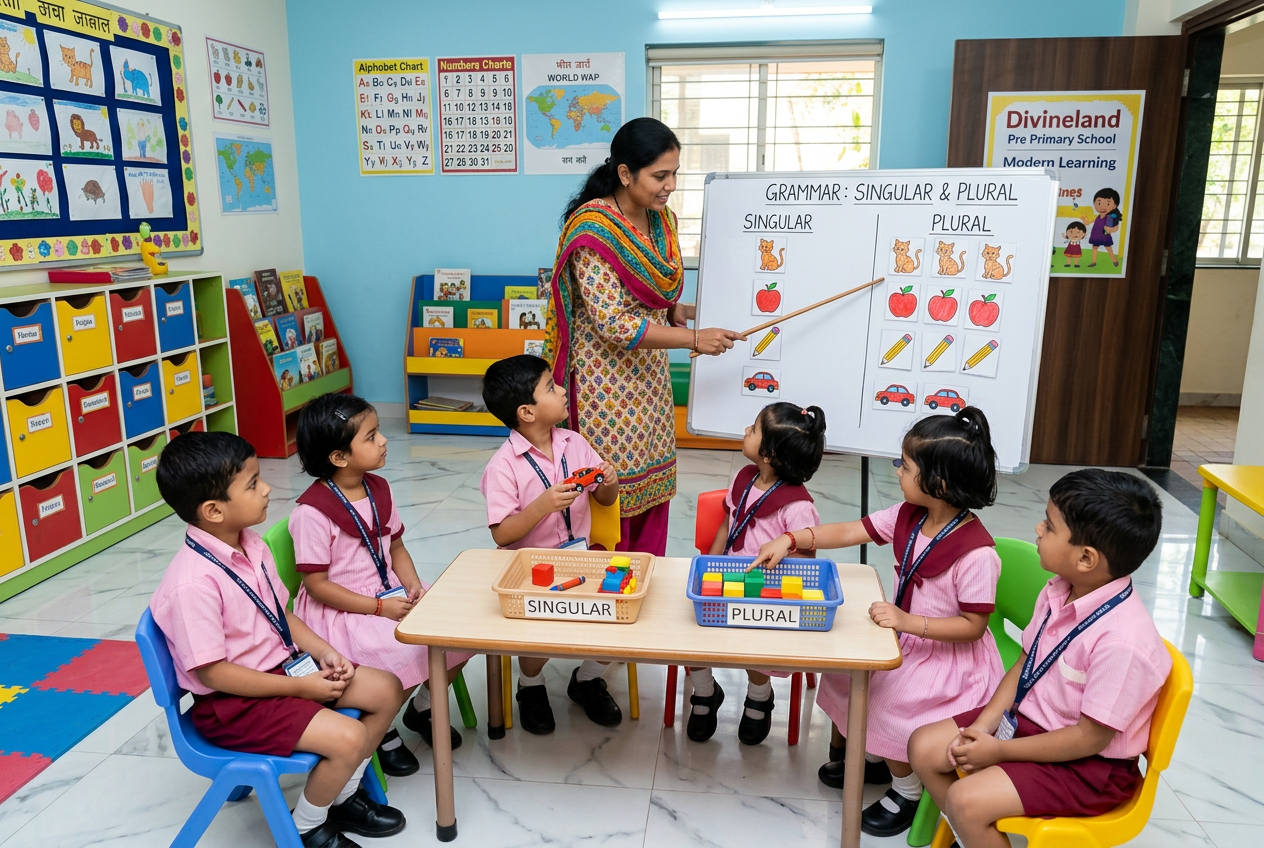
- Singular means one (one cat, one apple)
- Plural means more than one (two cats, many apples)
These simple ideas make it easier to apply Singular and Plural Rules in daily learning.
To make an inquiry, Call or Whatsapp on +919082778593 / +918591021373.
Click Here, for downloading the school brochure!
Important Singular and Plural Rules for Preschoolers
Below are the most common Singular and Plural Rules explained thoroughly:
Adding “-s” to Make Plural
This is the most basic of all Singular and Plural Rules.
- cat → cats
- dog → dogs
- book → books
Children can easily understand this rule as it is used most often in rules.
Adding “-es” for Words Ending in s, sh, ch, or x
Another important part of Singular and Plural Rules is adding “-es” to certain words.
- bus → buses
- dish → dishes
- box → boxes
- watch → watches
This rule helps children pronounce words correctly while learning Singular and Plural Rules.
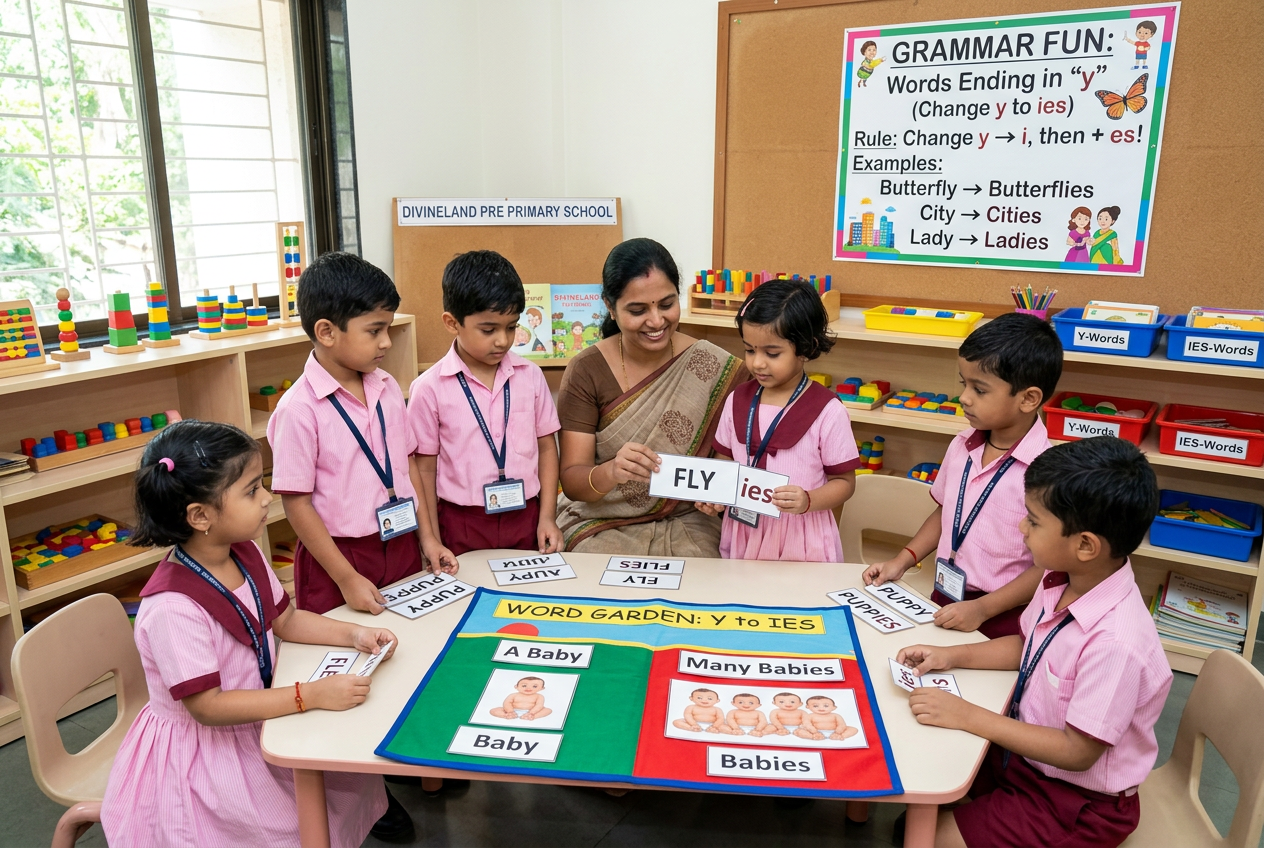
Words Ending in “y” (Change y to ies)
Some Singular and Plural Rules explain changes in spelling.
- baby → babies
- toy → toys (exception: just add “s”)
If a word ends in a consonant + y, it changes while applying Singular and Plural Rules.
Words Ending in “f” or “fe” (Change to ves)
This is one of the slightly different Singular and Plural Rules.
- leaf → leaves
- knife → knives
Though not very common for beginners, it is useful in learning rules.
Irregular Plurals (No Fixed Rule)
Some words follow unique Singular and Plural Rules and need to be remembered.
- child → children
- man → men
- foot → feet
These are fun examples that make the singular and Plural Rules interesting for preschoolers.
Same Word for Singular and Plural
Certain words do not change, which is another part of the rules.
- sheep → sheep
- fish → fish
These examples show that not all Singular and Plural Rules require changes in spelling.
Tips to Teach Singular and Plural Rules
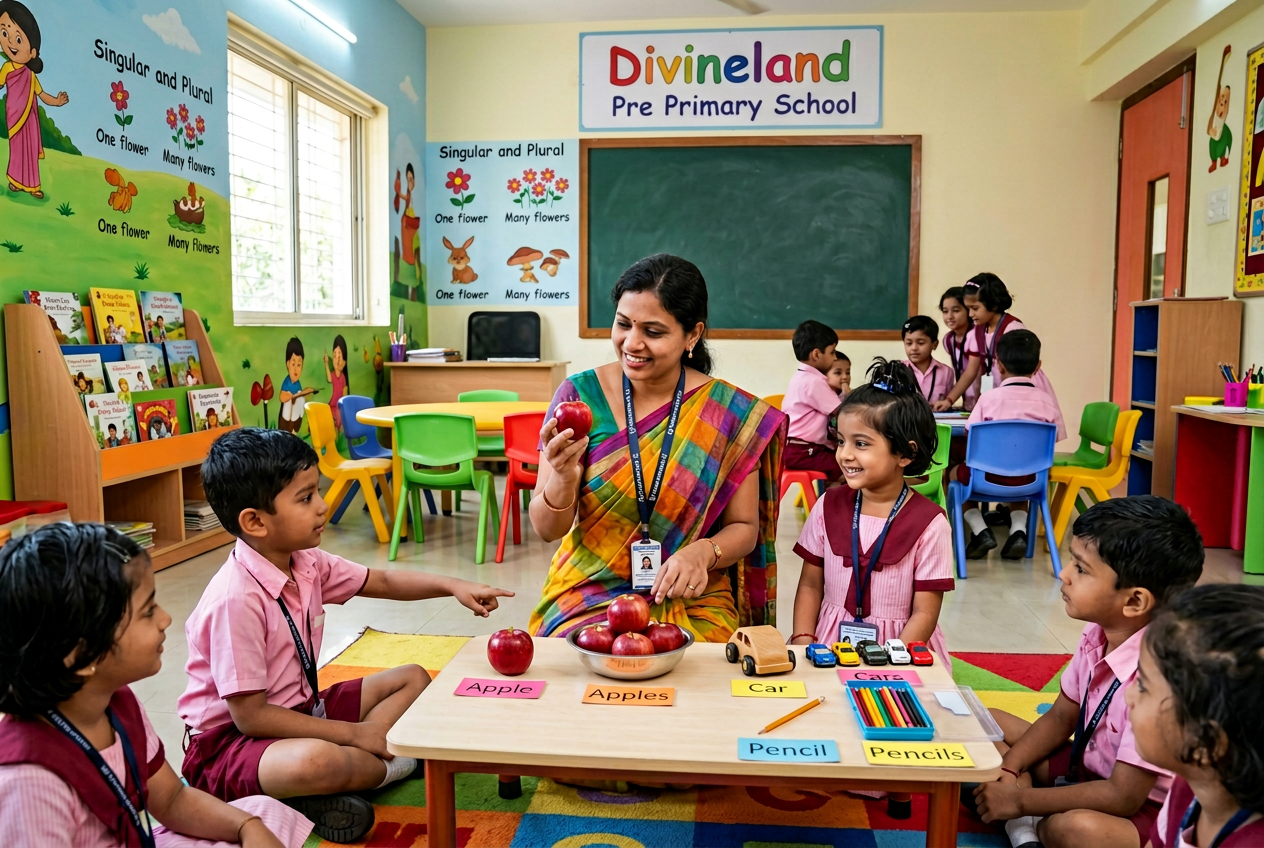
- Use real-life objects to explain the rules for singular and plural
- Practice with pictures and flashcards
- Encourage children to speak using the singular and Plural Rules daily
- Use simple games to reinforce the singular and Plural Rules
- Repeat examples regularly for a better understanding of the singular and Plural Rules
Learning Basic Grammar becomes easier when taught step by step. With regular practice, kids can understand changes in words and use them properly in sentences. Clear examples, repetition, and fun activities help preschoolers feel confident and improve their communication skills over time.
Kids can build a strong foundation in language and improve their communication skills by learning the rules for the singular and plural. With regular practice and the right guidance, young learners can easily understand these ideas and use them confidently in everyday conversations. If you want to give your child a supportive and nurturing environment to strengthen their early learning, consider enrolling them at Divineland Pre Primary School, where experienced teachers focus on building important language skills in a fun and engaging way.
Strong grammar starts early—enroll your child at Divineland today!
To make an inquiry, Call or Whatsapp on +919082778593 / +918591021373.
Click Here, for downloading the school brochure!
FAQs
What are Common Rules for Forming Plurals?
To make most nouns plural, you add "s" or "es." Some words that end in "y" can change to "ies," while some have irregular forms, like "child" to "children."
Where can Children Learn Singular and Plural Rules Effectively?
At Divineland Pre Primary School, kids learn the rules for single and plural through engaging activities. This makes it easy for them to understand grammar and improve their language skills.