Learning numbers is a vital early skill that helps youngsters learn about counting, quantity, order and fundamental math. Number Identification Activities makes this learning process fun with games, flashcards, objects, music and colourful worksheets. These easy tasks help children in kindergarten learn to recognize numbers, relate them to quantities, and recall them more easily.
The Number Identification Activities not only prepares your young learner to understand addition, subtraction and other mathematical concepts but also develops observation, focus and confidence through regular practice.
Number Flashcard Hunt
Create flashcards with the numbers 1 to 10 or 1 to 20, depending on the child’s level. Hide the cards around the classroom or home and have the students look for them. Ask the youngster to say the number out loud when they find a card. Once they collect the cards they can also get them in the right numerical order.
To make the activity more relevant, ask the youngsters to collect objects corresponding to the number shown. For example, if a child finds the number 5, they can gather five crayons. This practice will assist in number recognition, counting, observation and movement of the body.
Match Numbers with Objects
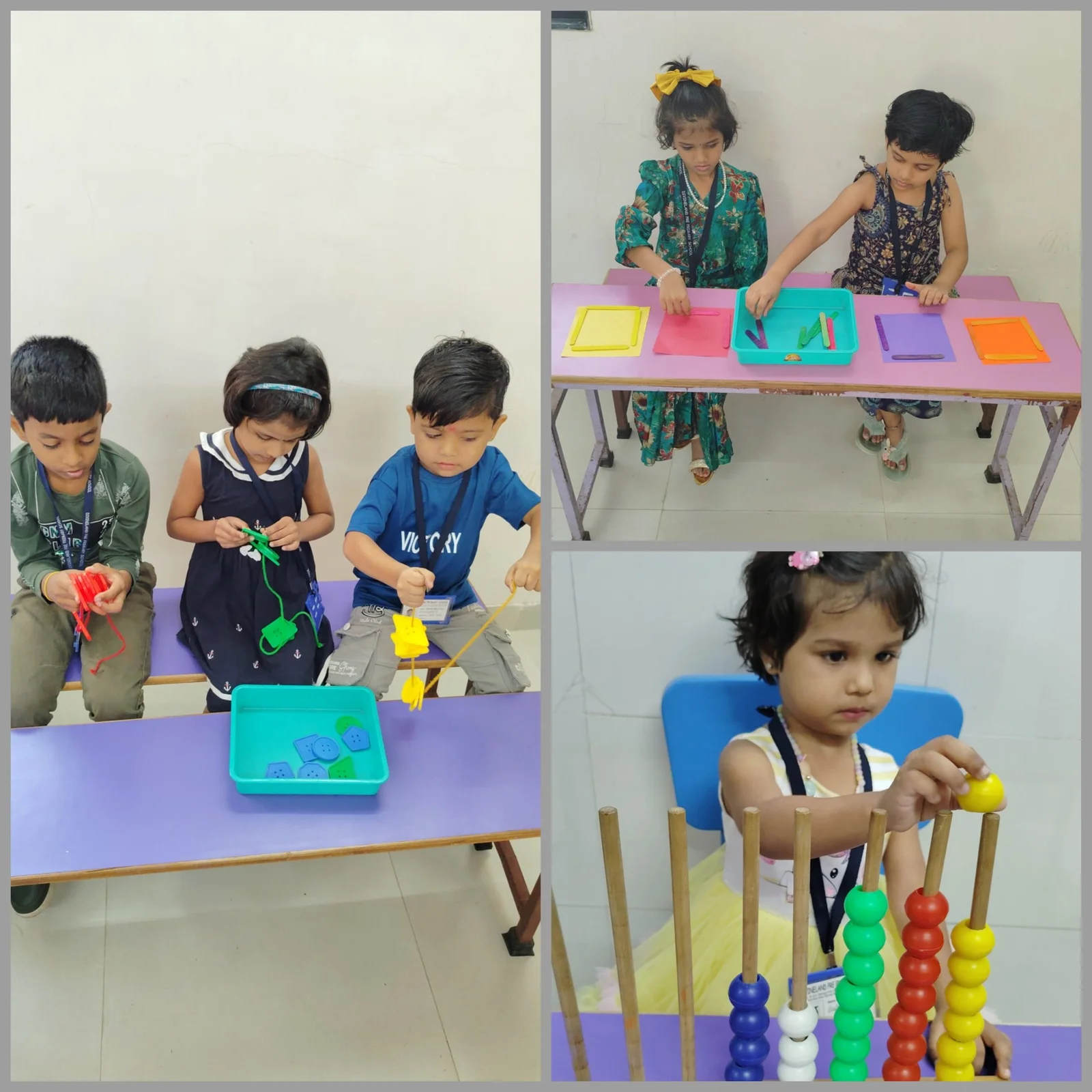
Have numerals written on separate cards and little objects like buttons, beads, blocks, bottle caps, or toy animals handy. Have youngsters draw a number card and place the correct number of things next to it. For example, number 4 should be matched to four blocks.
Start with numerals from 1 to 5. Introduce bigger numbers slowly. Different things may also be used on different days to keep the children interested. This game helps toddlers comprehend that each written number indicates a certain quantity. It improves numerical recognition, 1:1 correspondence, counting accuracy, fine motor abilities and logical reasoning.
Number Hopscotch
Make a hopscotch grid on the floor with chalk or masking tape. Fill in one number in each box. Call out a number and have the child jump on the box with the number. The children can also hop from one number to the next in the correct order.
For a more sophisticated version, give simple instructions such as “Jump on the number after 4” or “Stand on the number before 8.” This movement-based activity keeps toddlers busy while learning. Number hopscotch helps children develop their number recognition, sequencing, listening skills, balance, coordination and knowledge of the concept of before and after numbers.
Call or Whatsapp on +919082778593 / +918591021373, for Admission Details!
Click Here, to download the brochure!
Number Sorting Activity
Prepare number cards and multiple labeled containers, bowls or cartons. Children can sort the number cards by various instructions. They could, for example, arrange numbers 1 to 5 in one box and numbers 6 to 10 in the other. When they know the basic principle they can also sort odd and even numbers.
Another approach is to jumble numerals written in different colors, sizes or typefaces and urge youngsters to arrange matching numbers together. This helps children to learn that a number is the same no matter how it looks. It develops visual discrimination, number identification, classification abilities, focus and mathematical reasoning.
Number Fishing Game
Make paper fish and write a different number on each. Attach a paperclip to each fish. Make a fishing pole from a stick, string and magnet. The rod can be used by children to catch a numbered fish. They will call out the number when they catch it.
Children can be asked by the teachers to organize the fish by number or to gather stuff by number captured. For example, a toddler who catches number 7 can count seven beads. The Number Fishing Game is a fun Learning Experience that helps build number awareness, hand-eye coordination, patience, focus, counting skills and fine motor control.
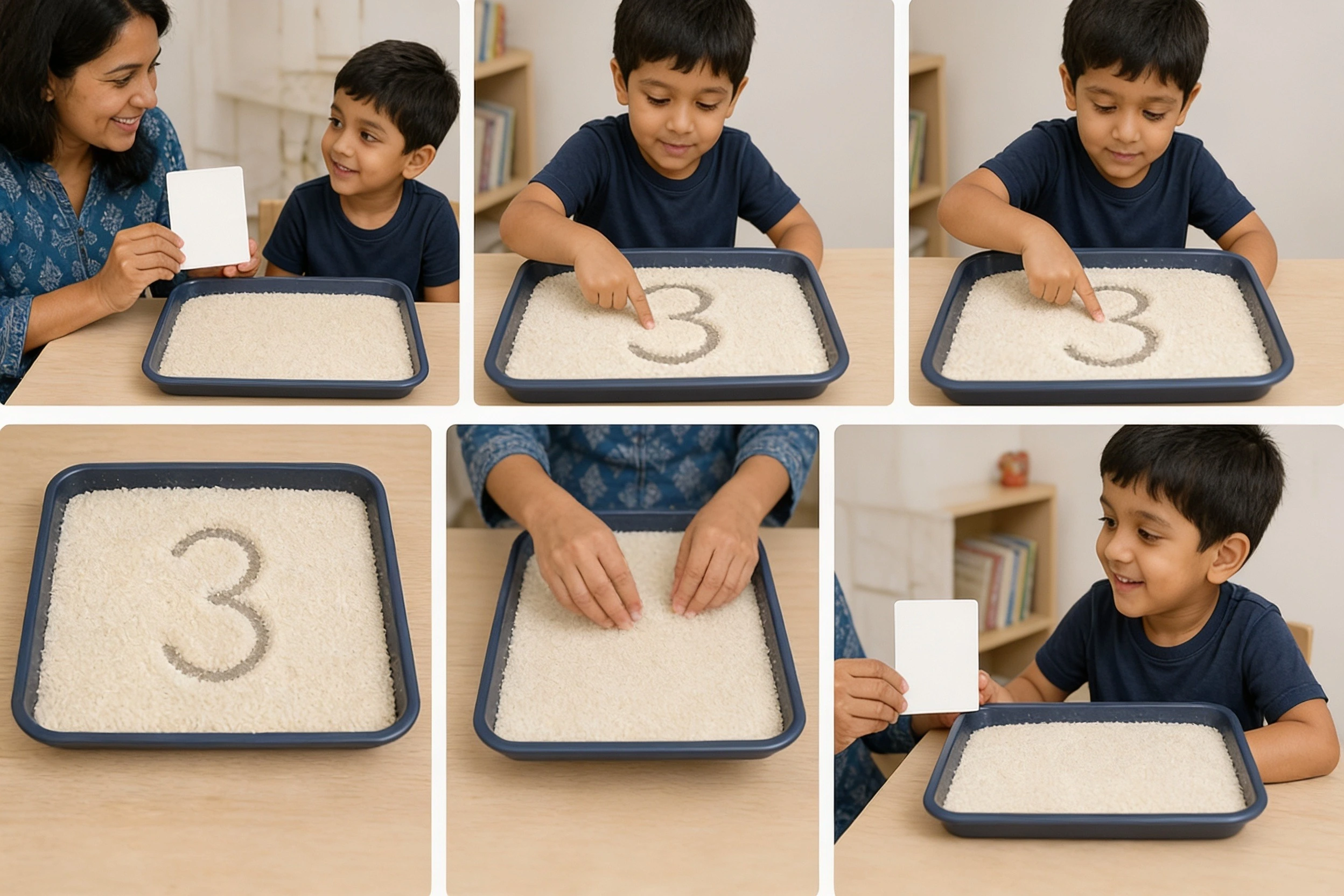
Number Tracing Tray
Fill a small tray with sand, flour, salt, rice or semolina. Show the youngster a number card and ask the child to trace the same number on the tray with his finger. Have the youngster say the number while he traces the number. After each attempt the tray can be gently shook to generate a new surface.
Children might start by tracing over a number made by an adult, and then try to write the number themselves. This practice allows students to memorize the shape of numbers through touch and movement. It develops recognition of numbers, correct writing of numbers, finger control, pre-writing skills, focus and sensory development.
Number Bingo
Make up bingo cards with different numbers on. Give youngsters counters, buttons or paper circles. At each time the teacher or parent calls out one number. Children listen intently and discover the number on their sheet and cover it with a counter. The first youngster to finish a row or the whole sheet can call out “Bingo.”
Begin the game with a few numbers and gradually increase the range. You can also use pictures showing quantities instead of verbal numbers. Numerical Bingo reinforces listening, visual scanning, numerical recall, attention, memory and classroom engagement. It is especially handy for re-reading numerals presented before.
Fun and meaningful early maths for young children can be achieved through number identification games. At Divineland Pre Primary School, children learn numbers via games, tales, objects and joyful classroom experiences. Give your child a strong learning foundation in a loving setting. Contact Divineland Pre Primary School today for admission and inquiries.
Enrol your child at Divineland Pre Primary School for joyful number learning!
Call or Whatsapp on +919082778593 / +918591021373, for Admission Details!
Click Here, to download the brochure!
FAQs
How can parents teach number identification at home?
Parents can use number cards, toys, stairs, calendars and household items for counting, matching and number hunts. Regular daily practice keeps learning easy, active and enjoyable.
How does Divineland Pre Primary School teach numbers?
Divineland Pre Primary School uses play-based games, number cards, puzzles, songs and hands-on activities to make number recognition simple, engaging clear and age-appropriate too.