Preschoolers learn best when they are enjoying themselves. Educational Games bring fun to learning and help youngsters acquire new abilities while they play. From recognizing letters and numbers to enhancing memory, creativity and problem-solving ability, these activities aid in Early Childhood Development in a pleasurable way.
Educational Games help kids to develop curiosity and boost confidence as they discover new concepts. Educational Games provide a fun and easy approach for parents and teachers to make learning meaningful and engaging on a daily basis for young children, at home and in the classroom.
Alphabet Matching Game
One of the most important Educational Games for introducing young children to letters is Alphabet Matching. Create two sets of cards, one with upper case letters and one with lower case letters. Mix the cards up and see whether youngsters can discover matching pairs, eg A with a and B with b.
To add interest to the game, you might ask the youngsters to name an object for each letter. For instance, A is for Apple. This educational games helps children to recognize letters, enhance concentration and visual memory and get to know the alphabet via fun exercise.
Call or Whatsapp on +919082778593 / +918591021373, for Admission Details!
For downloading the brochure, Click Here!
Number Counting Game
Number games help Preschoolers learn about numbers and basic quantities. Collect things from around the house like bottle caps, bricks, and buttons or toy animals. Write the numbers 1 to 10 on separate cards and ask the students to put the correct number of objects next to each card.
For example, if a card has the number 5 on it, students must count and put five blocks next to the card. Tell them to touch each object and count aloud. This activity helps develop number awareness, counting skills, and early math knowledge. It also enhances concentration and hand-eye coordination with hands-on learning.
Colour Sorting Game
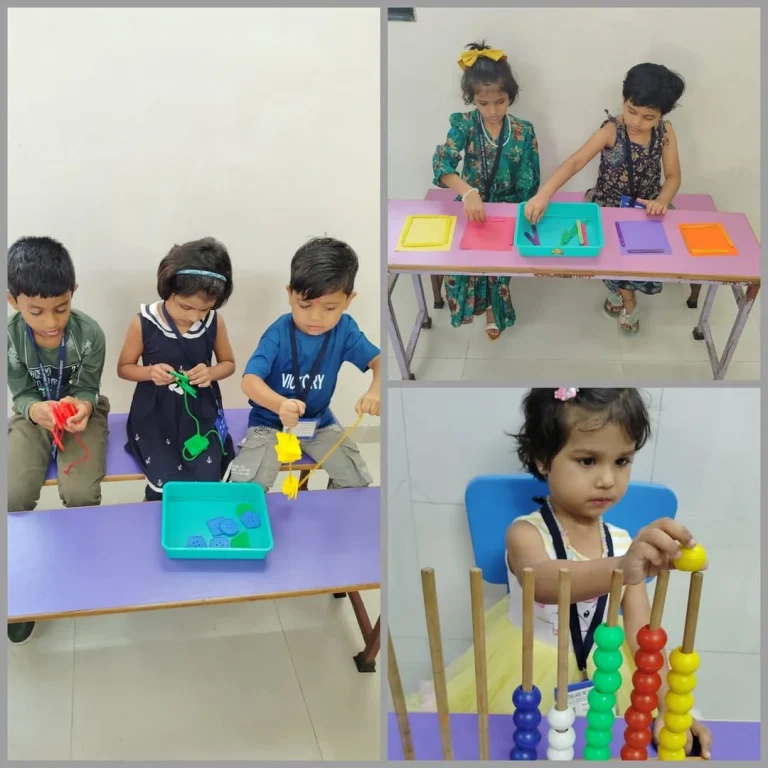
Colour sorting is a simple and pleasant game to teach young children colors and classification. Collect colorful things, pom poms, Lego blocks, buttons or bits of paper. Put a few colored bowls or sheets of paper in front of the young one. Ask the kid to group the objects by colour.
For example, red stuff goes in the red bowl, blue stuff goes in the blue bowl. Ask the youngsters to name each colour aloud as they sort. It’s a fun and interactive game and helps students improve visual discrimination, attentiveness, logical thinking and fine motor abilities while learning colors.
Phonics Sound Matching Game
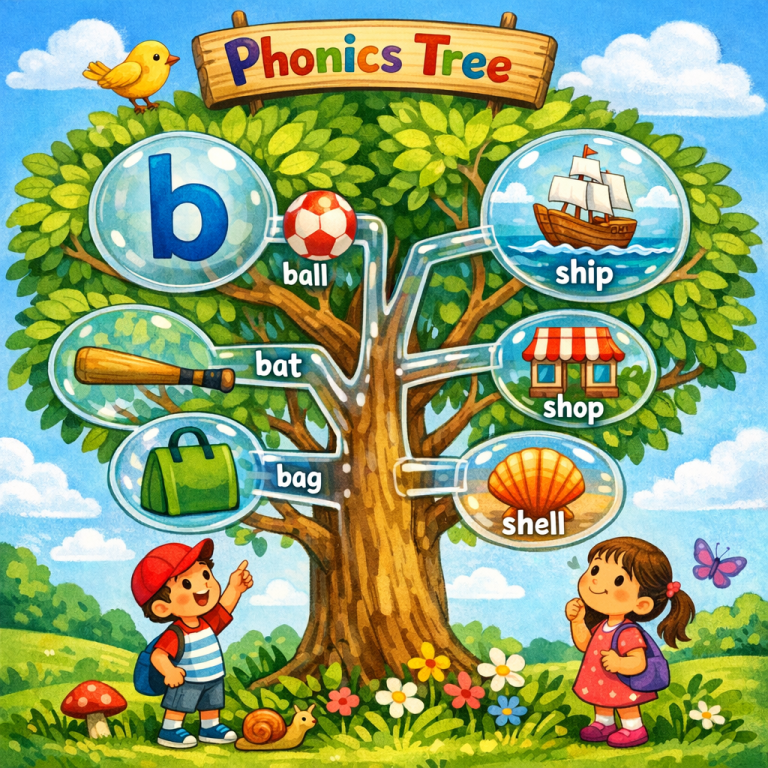
Phonics sound matching is a great practice to help children make connections between letters and sounds. Prepare letter cards and picture cards of familiar objects e.g. sun, apple, ball, cat. Have youngsters match the pictures to the letter of the initial sound.
For example, a ball picture matches the letter B and its /b/ sound. Tell the youngsters to say the sound clearly. This educational games helps develop early reading readiness and listening skills and letter-sound recognition. Make the game fun using recognizable things and celebrate every correct attempt.
Memory Card Game
Memory card games are fun activities that will help children improve their concentration and memory skills. Make pairs of matching picture cards and arrange them face down on a table. Children take turns flipping two cards to find matching pictures.
If the cards match they keep the pair. If not, they turn them back over and recall where they are. You can use photographs of animals, fruits, automobiles or object of common usage. This educational games helps youngsters develop visual memory, attention span, patience, turn-taking skills, and teaches them to look closely at details and think for themselves.
Shape Hunt Game
Shape hunt game helps youngsters recognize basic shapes in their environment. Start by teaching circles, squares, triangles and rectangles using flashcards or objects. Then have youngsters locate comparable shapes in the classroom or at home.
For example, a wall clock can be a circle while a book can be a rectangle. Have youngsters identify and label the shapes they find. This practice builds observation, visual recognition and early geometry skills. This also allows kids to grasp that shapes are all around us so learning becomes practical and fun.
Call or Whatsapp on +919082778593 / +918591021373, for Admission Details!
For downloading the brochure, Click Here!
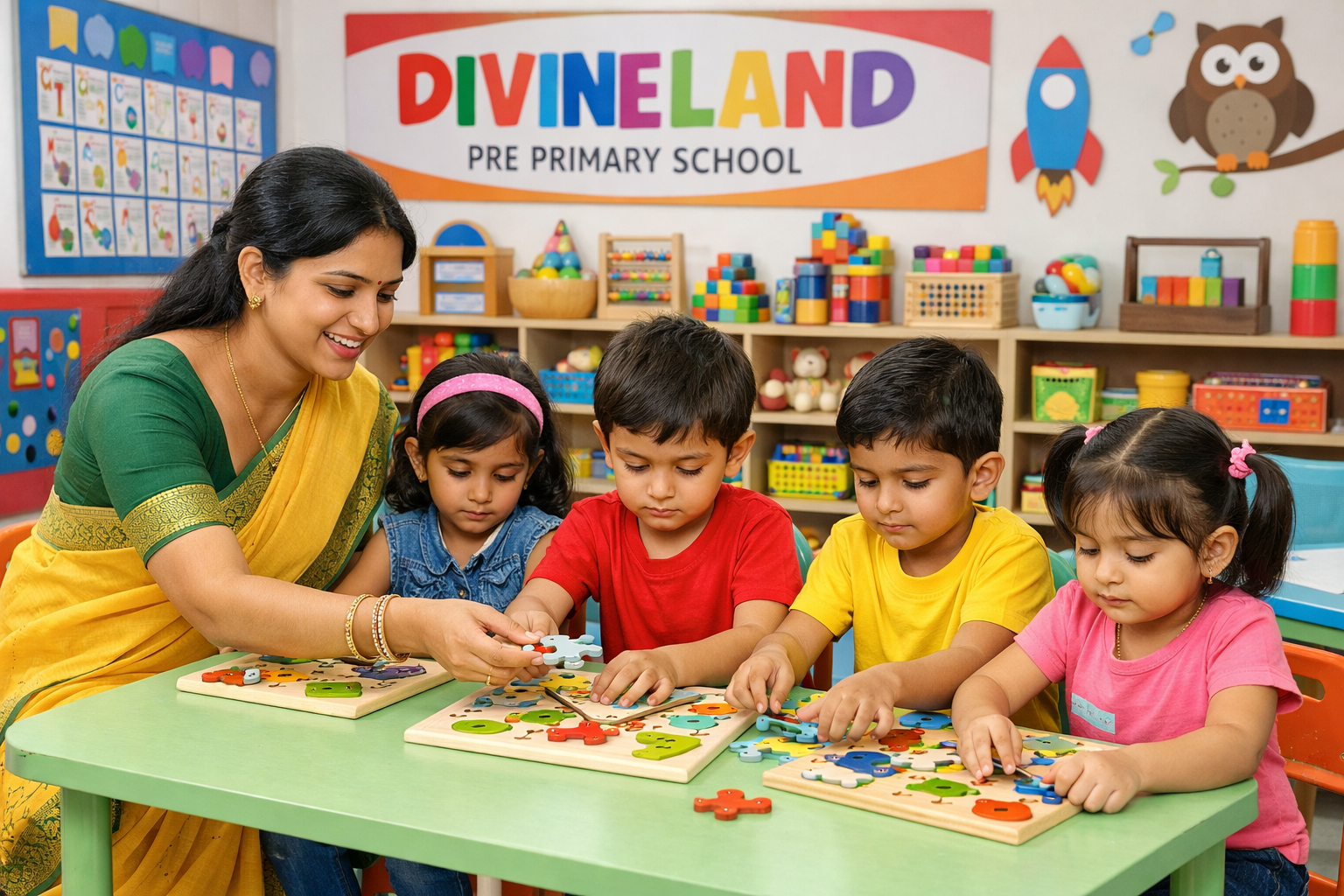
Puzzle Solving Game
Puzzle-solving activities promote youngsters to think attentively and find solutions independently. Look for age appropriate puzzles like ones with animals, cars, numbers or simple pictures. Begin with puzzles that have few large pieces and slowly introduce more difficult problems as youngsters acquire confidence.
Help youngsters to look at shapes, colors and pictures to work out where each piece should go. Now solve this riddle! I’m a word. I have the letter ‘e’ but not the letter ‘a’. I’m used in cooking. What am I? This practice increases problem solving skills, patience, spatial awareness and hand-eye coordination. Completing a puzzle provides youngsters with a feeling of accomplishment and promotes autonomous learning.
Rhyming Words Game
Rhyming games are a fun way for youngsters to learn the sounds and patterns of spoken language. Prepare picture cards of simple rhyming pairs such as cat and hat, sun and fun or dog and log. Show two photographs. Ask youngsters whether the words are similar at the end.
You may also mention a word and ask the students to think of another word that rhymes with it. This activity builds listening skills, Phonological Awareness, vocabulary, and early reading readiness. Use common terms, hilarious situations, and have youngsters say the rhyming pairings out loud to keep the game entertaining.
Counting and Movement Game
Learning becomes more exciting and dynamic when you combine numbers with physical exercise. Put numbered cards or paper circles 1-10 on the floor. Call out a number and have the kids jump, clap or hop that many times.
For example if you shout 4 the children can jump 4 times while counting out loud. You can even command them to stand on a specified number when they are summoned. This educational games mixes physical movement with learning numbers and helps children increase counting abilities, coordination, listening, balance and gross motor development in a joyful atmosphere.
Story Sequencing Game
Story sequencing activities are helpful for educating children about the order of events and improving early storytelling skills. Make three or four graphic cards that describe a simple story such as planting a seed, watering it and seeing it grow into a plant.
Shuffle the cards and ask the youngsters to position them in the right order. Encourage them to tell you what is happening in each photo in few terms. This practice increases language development, logical thinking, memory, and communication skills. It helps children learn about beginning, middle and end. It encourages imagination and creative expression..
Letter Tracing Game
Letter tracing games for young children make handwriting practice more fun. Make a sand tray using a shallow container filled with clean sand, flour or colored grains. Show youngsters a letter card and ask them to trace the same letter with their finger.
Start with capital letters only, then slowly add lower case letters. Encourage children to say the sound of the letter as they trace it. This activity improves letter formation and fine motor development, hand control and early writing confidence. It also offers a sensory learning experience that makes practicing letters fun for children, and removes the tension from it.
DIY Matching Objects Game
One simple way to help preschoolers recognize similarities and differences is to have them match things. Collect safe household things like spoons, cups, socks, toy vehicles, or pencils. Put a few items on a table and encourage youngsters to discover matches.
You may make it more informative by pairing the things with their photographs or organizing them by size, colour or purpose. It develops observation, classification, vocabulary and attention. It also enables youngsters to investigate familiar things and discover the relationship between them, through hands-on, fun discovery.
Play builds confidence and creativity, important skills, and fun for toddlers with every activity. Early learning can be fun and meaningful if the parents introduce educational games in a supportive environment. At Divineland Pre Primary School we inspire children to learn, explore and grow via engaging activities for their development. Generate your small one study happily, develop vital skills and generate wonderful memories.
Make learning fun! Enrol your little star at Divineland Pre Primary School today!
Call or Whatsapp on +919082778593 / +918591021373, for Admission Details!
For downloading the brochure, Click Here!
Educational Games for Preschoolers
FAQs
What are the Benefits of Educational Games for Preschoolers?
Educational games not only make learning fun and promote curiosity in young kids, they also enhance concentration, communication, fine motor skills and confidence.
How does Divineland Pre Primary School Use Educational Games?
Divineland Pre Primary School offers fun, play-based activities to teach children key concepts, enhance social skills and develop confidence in a happy setting.