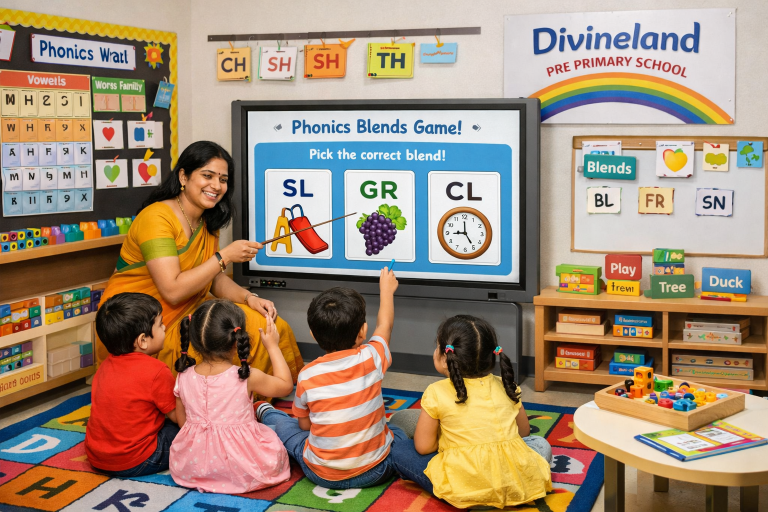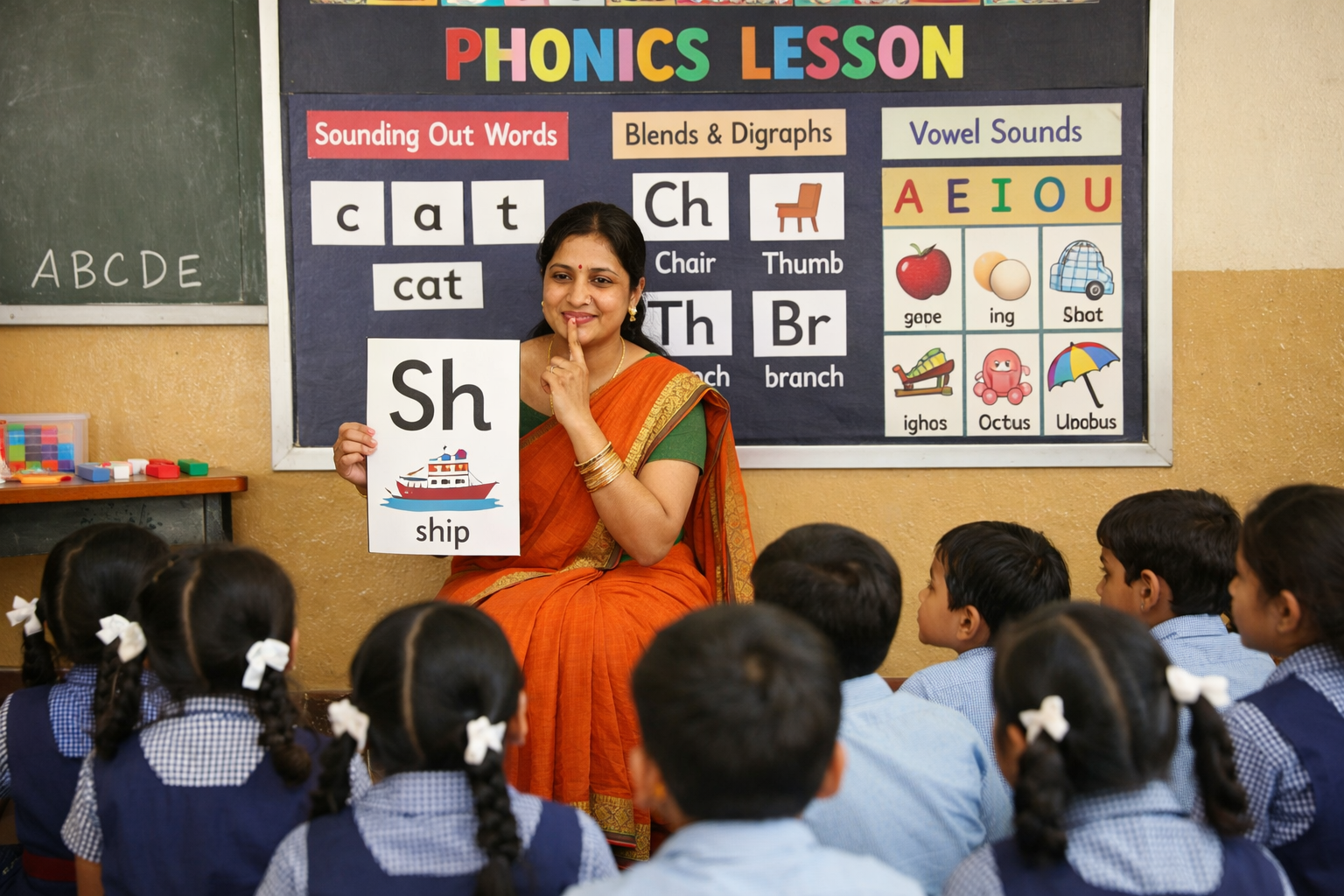
How to Help a Child Blend Sounds? Is a common question for parents and teachers who want to improve a child’s early reading skills? Blending helps children join individual letter sounds together to read complete words, such as /c/ /a/ /t/ becoming “cat.” Learning to Blend Sounds takes regular practice, patience, and simple phonics activities.
Using picture cards, sound games, short words, and clear pronunciation can make the process easier. When children practice how to Blend Sounds in a fun and supportive way, they gradually become more confident in reading unfamiliar words independently.
What Does Blending Sounds Mean in Phonics?
Blending sounds in phonics means joining separate letter sounds together to read a complete word. It is an important early reading skill that helps children understand how individual sounds combine to form meaningful words.
For example, a child may first say the sounds separately:
- /c/ /a/ /t/ = cat
- /s/ /u/ /n/ = sun
- /p/ /e/ /n/ = pen
- /d/ /o/ /g/ = dog
While blending, children are encouraged to say each sound clearly and then bring the sounds together smoothly. Instead of reading /c/ /a/ /t/ separately, they gradually learn to recognize the whole word as “cat.”
Blending usually begins with simple two- or three-sound words before children move on to longer words. Regular practice with letter sounds, picture cards, oral games, and simple words can help children develop confidence and improve their reading fluency over time.
Call or Whatsapp on +918850061389 / +918591021373, for Admission Details!
For downloading the brochure, Click Here!
Why Do Some Children Find It Difficult to Blend Sounds?
Some children may find sound blending difficult because they are still developing the basic skills needed for reading. Blending requires children to hear individual sounds clearly, remember them, and join them together to form a word. If any of these skills are weak, reading may become challenging.
Common reasons include:
- Difficulty recognising letter sounds: A child may not remember the correct sound linked to each letter.
- Weak phonemic awareness: Some children find it hard to hear and identify separate sounds within words.
- Adding extra “uh” sounds: Saying “cuh-a-tuh” instead of /c/ /a/ /t/ can make blending confusing.
- Lack of regular practice: Children need repeated practice to become comfortable with joining sounds.
- Using difficult words too early: Long or unfamiliar words can make blending harder and reduce confidence.
Starting with simple two- or three-sound words and practicing regularly can gradually improve a child’s blend sounds ability.
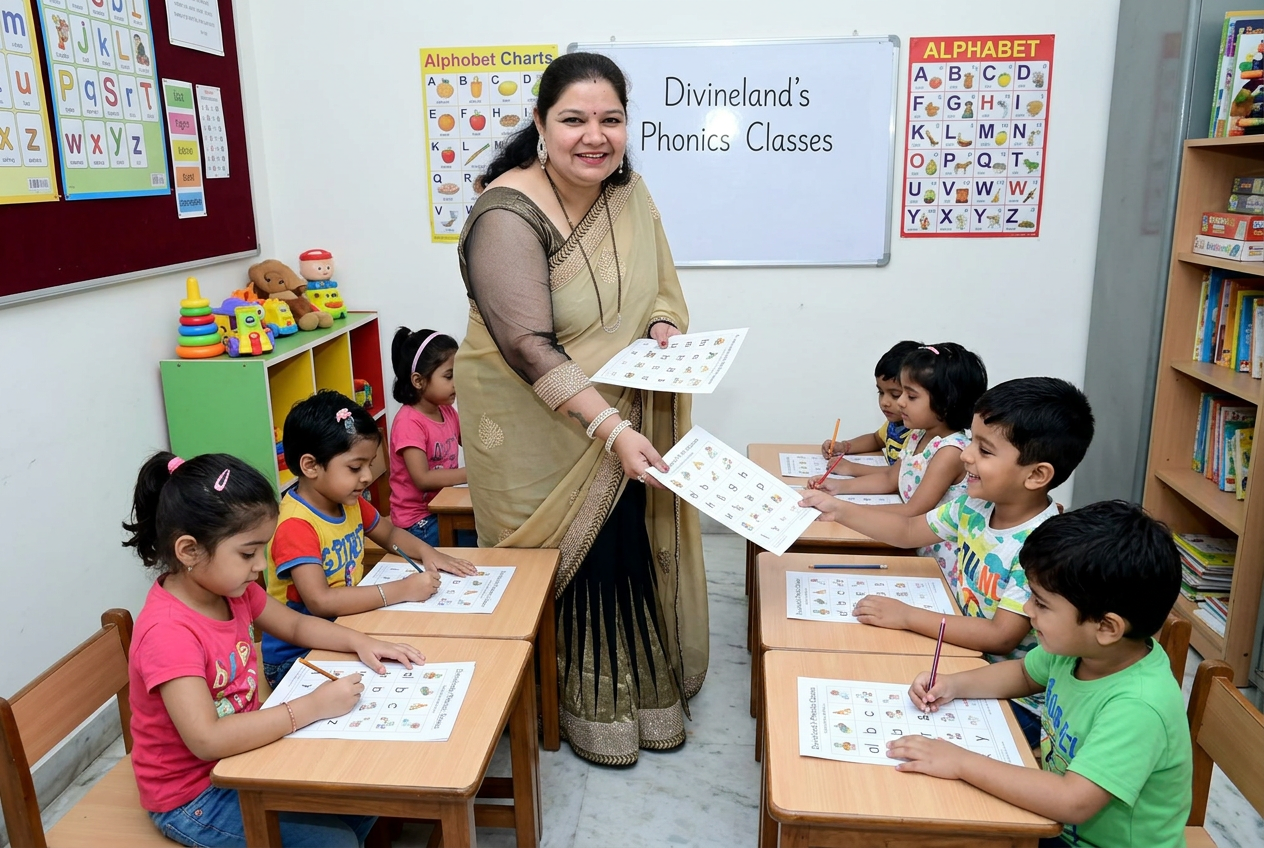
How to Help a Child Blend Sounds Step by Step?
Helping a child blend sounds becomes easier when the process is taught in small and clear steps. Start with simple words and give the child enough time to listen, repeat, and practice.
- Begin with two- and three-letter words: Use easy words such as ‘at, in, cat, sun, and dog’ before introducing longer words.
- Stretch each sound clearly: Say the sounds slowly, such as /m/ /a/ /t/, so the child can hear each sound separately.
- Model blending aloud: Show how separate sounds come together by saying /c/ /a/ /t/ and then smoothly reading “cat.”
- Use finger tracking: Move a finger under each letter while saying its sound, then slide the finger across the complete word.
- Repeat regularly: Practice the same words several times to build confidence and fluency.
- Increase difficulty gradually: Once simple words become easy, move to words with blends, digraphs, and more letters.
Fun Activities to Improve Sound Blending Skills
Sound blending becomes easier when children practice it through simple and enjoyable activities. These activities can be used at home or in the classroom to help children connect individual sounds and read complete words with greater confidence.
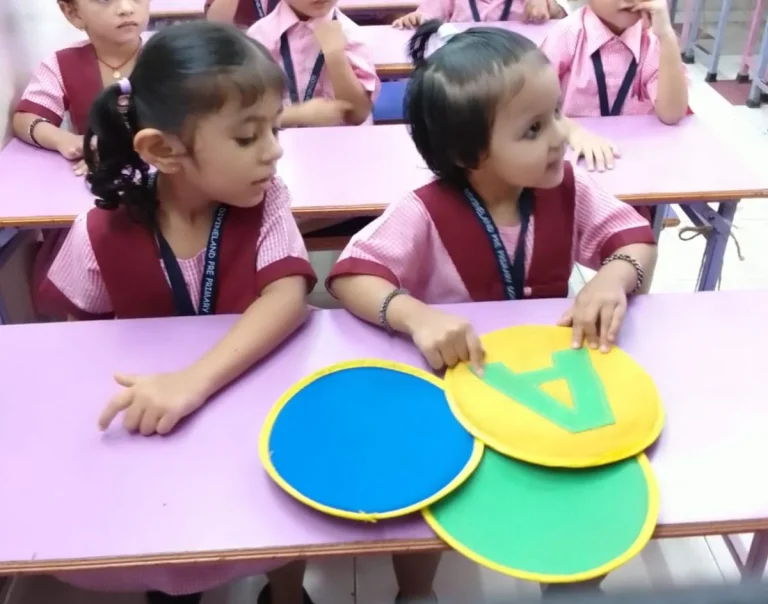
- Sound Cards: Show children letter or sound cards and ask them to say each sound slowly before joining them together to form a word.
- Blending Trains: Write one sound on each train compartment. Children move from one compartment to the next while saying the sounds and then blend them into a complete word.
- Picture Matching: Give children pictures along with matching word cards. They can blend the sounds in each word and match it with the correct picture.
- Word-Building Games: Use simple CVC words such as cat, sun, pen, and dog. Children can arrange letters in the correct order and practise blending them aloud.
- Magnetic Letters: Magnetic letters make learning more interactive. Children can move letters, create words, and say each sound before blending them together.
- Oral Blending Games: Say sounds separately, such as /m/ /a/ /p/, and ask the child to identify the word.
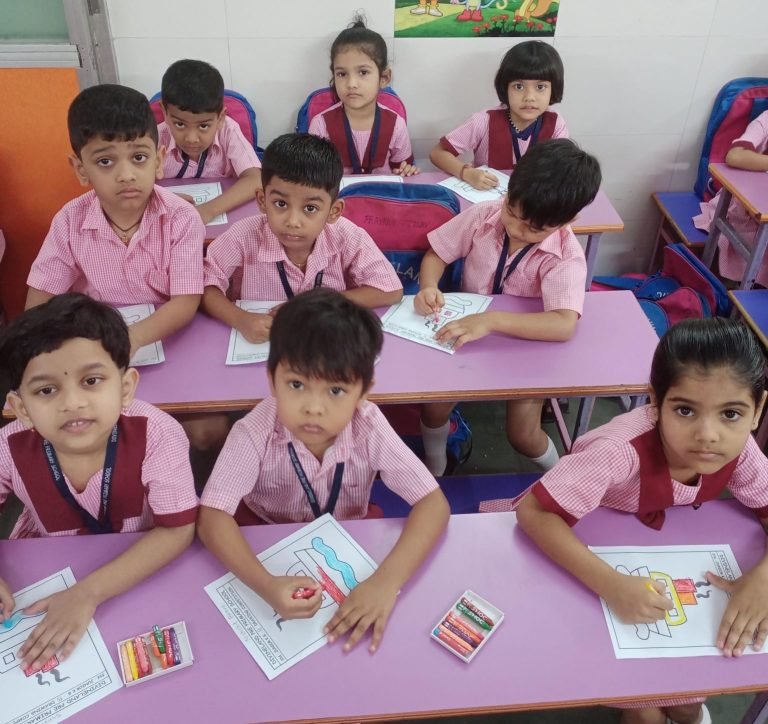
- Phonics Worksheets: Simple worksheets with matching, circling, filling blanks, and blending exercises provide extra practice and help reinforce sound blending skills.
Helping children blend sounds takes regular practice, patience, and the right guidance. Fun phonics activities can make reading easier and more enjoyable. Parents looking for structured learning support can consider enrolling their child in Divineland’s Phonics Classes, where engaging methods help children strengthen blending skills, pronunciation, vocabulary, and reading confidence.
Enroll your child in Divineland’s Phonics Classes for stronger blending skills.
Call or Whatsapp on +918850061389 / +918591021373, for Admission Details!
For downloading the brochure, Click Here!
How to Help a Child Blend Sounds?
FAQs
Why does My Child Struggle to Blend Sounds?
Children may struggle due to weak sound recognition or limited practice. Begin with easy words, model blending clearly, and practice in short sessions.
Are Divineland’s Phonics Classes Helpful for Blending?
Yes. Divineland’s Phonics Classes use structured phonics activities to help children improve sound blending, word reading, pronunciation, and confidence.