Early habits are strong in developing a child’s personality, discipline and future success. Children typically learn behaviour when they are young that stays with them throughout their lives and affects how they think, behave and interact with others. Teaching children good habits early on helps them create a strong foundation of responsibility and confidence.
Teaching Good Habits promotes positive behaviour in daily routines and social interactions. Patience and consistency make teaching good habits a natural aspect of a child’s growth and development.
Importance of Teaching Good Habits Early
Good Habits, at an early age, have a crucial function in moulding a child’s personality and future behaviour. Teaching Good Habits helps children understand what is expected of them and encourages responsible behaviour in everyday settings. As toddlers learn to follow simple routines and take on modest tasks, they gradually become more confident and independent.
- Builds responsibility and independence: Teaching Good Habits, like tidying up toys or looking after personal belongings, helps children take responsibility for their actions.
- Encourages social behaviour: Children learn to connect positively with others by learning good habits such as sharing, listening and using kind words.
- Promotes emotional growth: Teaching Good Habits helps children cope with emotions, be empathetic and identify the feelings of others.
- Creates a structured schedule: Teaching Good Habits sets up a routine, which gives children a sense of stability and security.
Consistent Teaching of Good Habits helps children learn discipline and positive thinking at an early age. Over time, teaching good habits becomes a part of their daily life and helps kids grow up into responsible and well-mannered people.
Call or Whatsapp on +919082778593 / +918591021373, for Admission Details!
Click Here, to download the School Brochure!
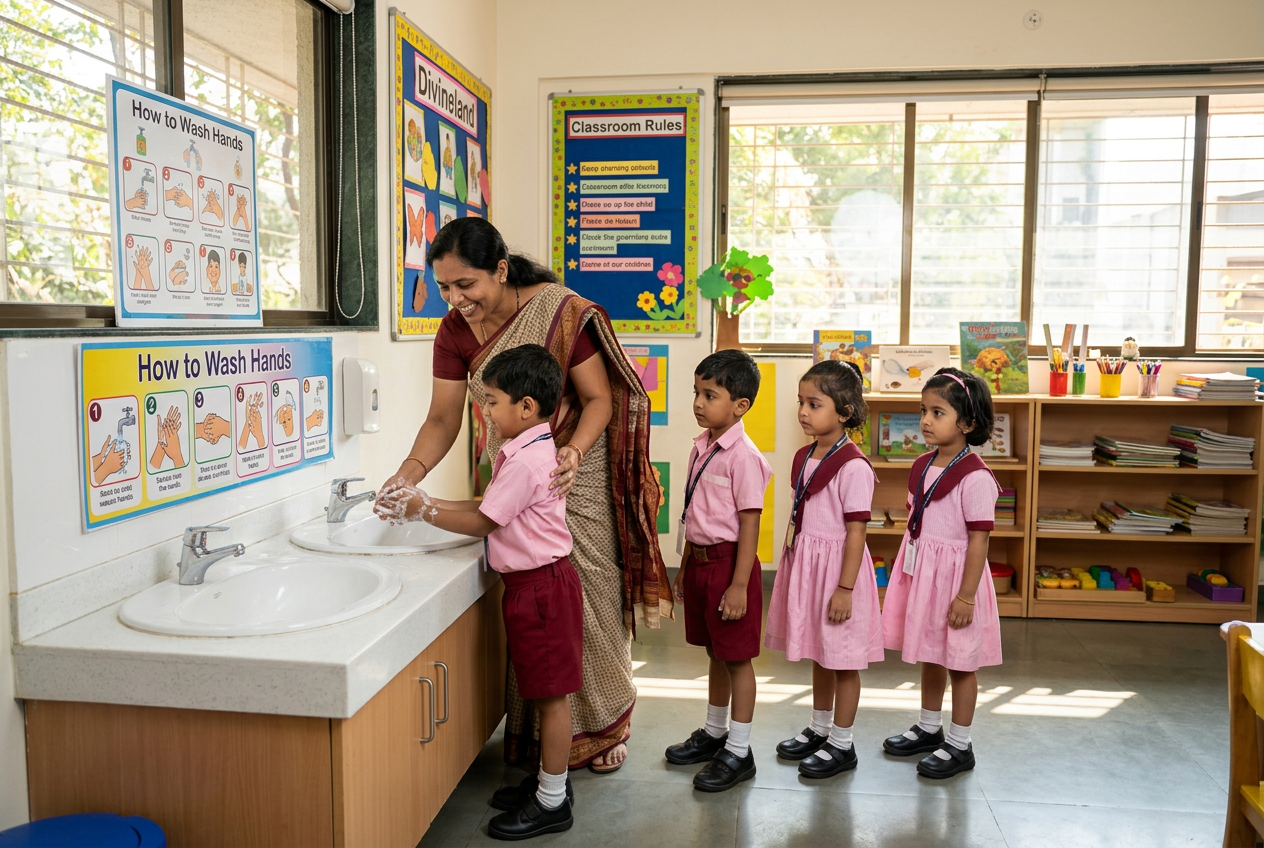
Essential Good Habits for Kids
Teaching Good Habits is important in developing a child’s conduct from a young age. Teaching good habits allows youngsters to know what is proper and promotes a strong sense of discipline. With daily concentration on Teaching Good Habits, children gradually transform simple behaviours into lifelong habits. Teaching good habits doesn’t have to be complicated; it starts with tiny, consistent steps.
Here are some essential habits every child should learn:
Saying “please” and “thank you.”
Teaching children nice phrases fosters respect and goodwill in everyday relationships.
Brushing teeth twice daily
Good oral care is part of Teaching Good Habits, helping youngsters stay healthy.
Keeping toys and belongings organized
Good habits such as tidying up after playtime build responsibility and neatness.
Sharing and helping others
Teaching Good Habits helps social development. Children are taught to care about others.
Following a daily routine (sleep, study, play)
A regular routine is a crucial part of Teaching Good Habits, providing children with structure and balance.
Practicing hygiene (washing hands, cleanliness)
Teaching kids good hygiene makes them stay healthy and encourages them to have a healthy lifestyle.
Teaching Good Habits By concentrating on these simple behaviours, Teaching Good Habits becomes a part of a child’s daily life, helping them to grow into confident and responsible persons.
Call or Whatsapp on +919082778593 / +918591021373, for Admission Details!
Click Here, to download the School Brochure!
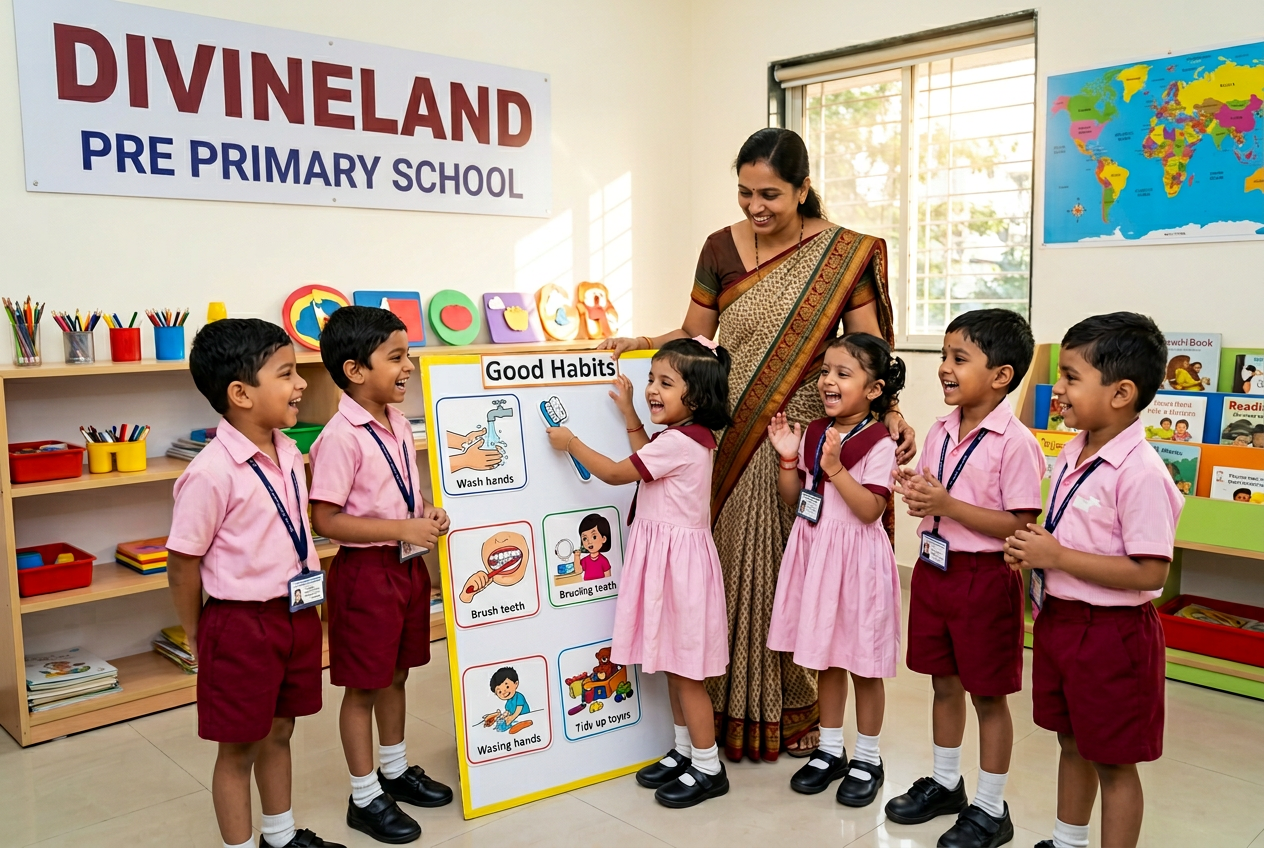
Effective Ways to Teach Good Habits
Good habits are easier to teach if you use straightforward, practical tactics that youngsters can comprehend and use every day. The trick is to make learning a natural, consistent and interesting affair so that Teaching Good Habits becomes a usual part of a child’s life.
Lead by example
Children watch adults intently and copy. When parents and instructors are clean, kind and disciplined Teaching Good Habits happens naturally, without having to enforce laws.
Consistency is key
Children learn to remember what to do by doing it everyday. Good habits are best taught by doing them every day. Examples of actions to perform are brushing teeth, tidying up, and greeting others.
Use positive reinforcement
Children are motivated to repeat positive conduct through praise and tiny rewards. Children who feel appreciated for their efforts learn good habits better.
Make it fun
They are interesting things for youngsters. Games, music or fun activities. Fun ways to teach good habits helps youngsters learn faster and enjoy the process.
Set clear rules and expectations
The easier it is for children to obey simple directions like “put toys back after playing,” the better. Good Habits need to be taught with clarity so youngsters know what is expected.
Use storytelling to explain values
Stories help children learn what is good and wrong in a fun way. Good habits are taught by means of stories and this makes the teachings memorable and easy to remember.
With patience and consistent practice, Teaching Good Habits is a smooth and positive experience for both children and adults.
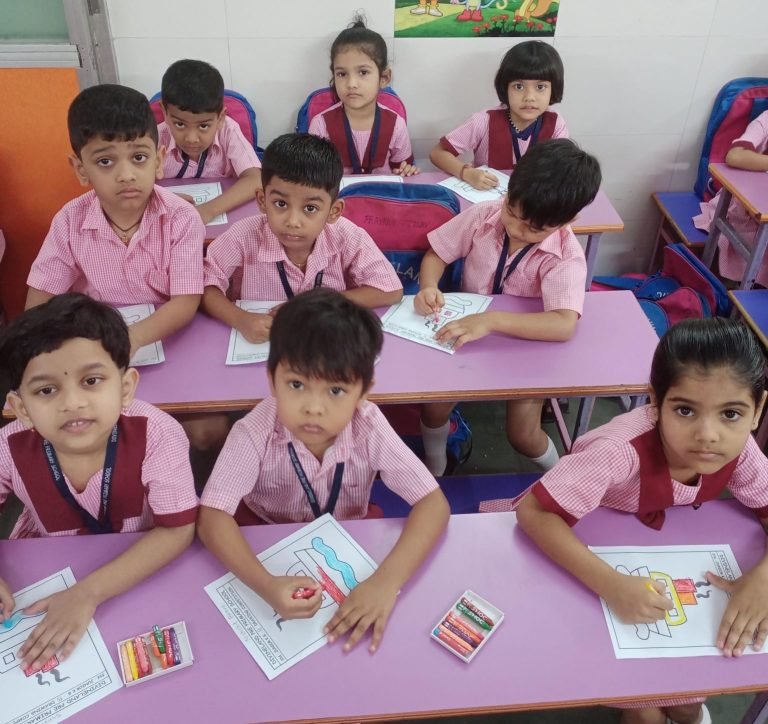
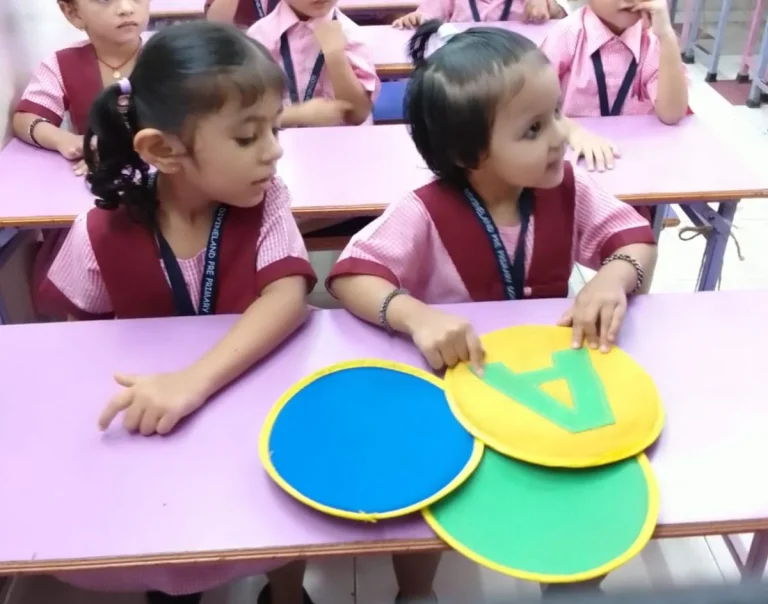
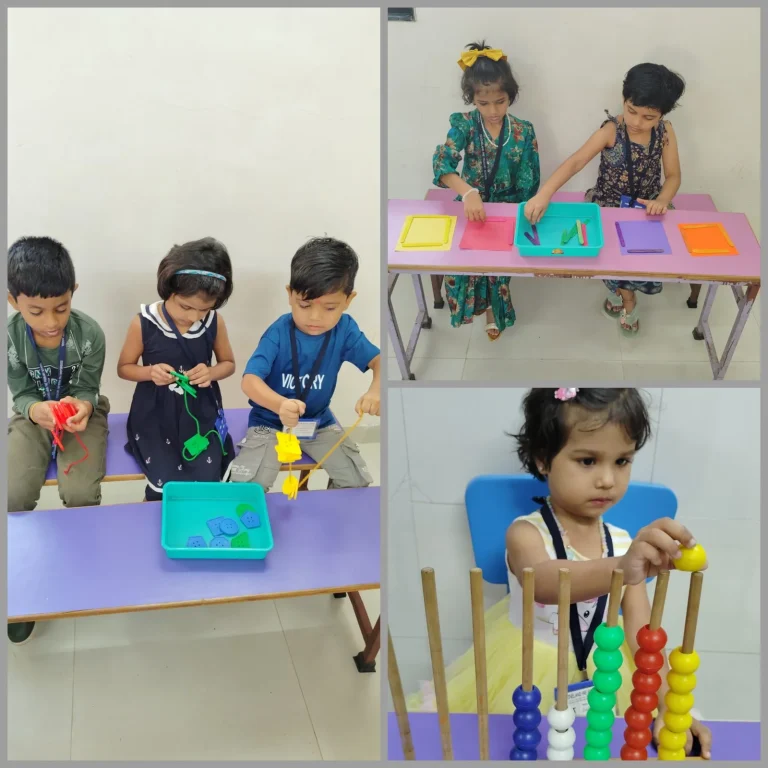
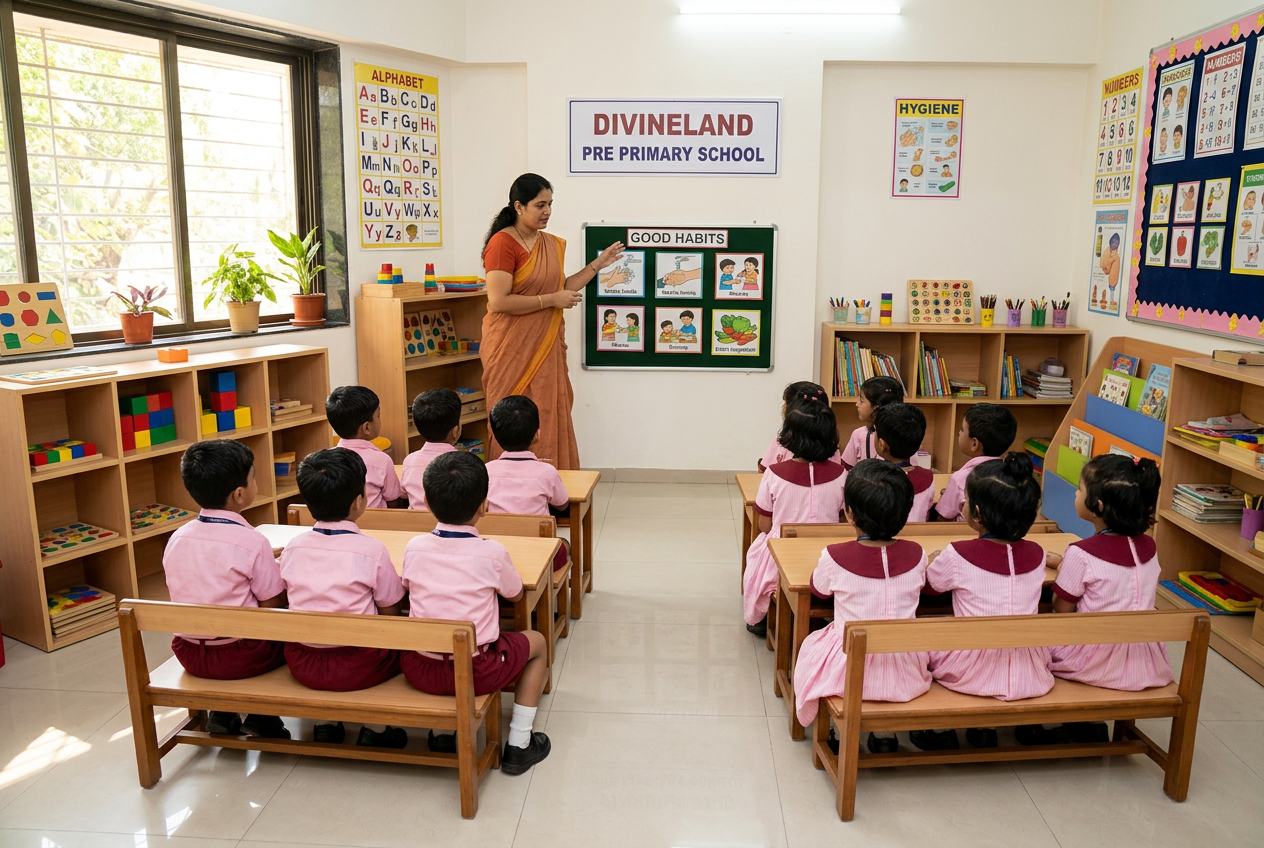
Good habits, if instilled early, help in building a firm foundation for a child’s future. Habits mould a child’s confidence, discipline and social skills. Choosing the correct preschool is a crucial step in this journey. At Divineland Pre Primary School, children are taught through planned routines, stimulating activities and positive direction by caring teachers. This nurturing environment emphasizes consistency, responsibility and independence so that young learners can practice excellent habits every day. A healthy preschool environment allows these habits to grow spontaneously and remain with the children for life.
Shape strong habits early—choose Divineland Pre Primary School today!
Call or Whatsapp on +919082778593 / +918591021373, for Admission Details!
Click Here, to download the School Brochure!
FAQs
How can Parents Teach Good Habits at Home?
Parents can teach good habits by establishing routines, setting examples, giving gentle reminders and rewarding good behaviour to teach consistency and responsibility.
How does Divineland Pre-Primary School Help in Building Good Habits?
Divineland Pre Primary School helps in building healthy habits in children through daily routines, guided activities and positive reinforcement. Children learn to be disciplined and acquire social skills naturally.