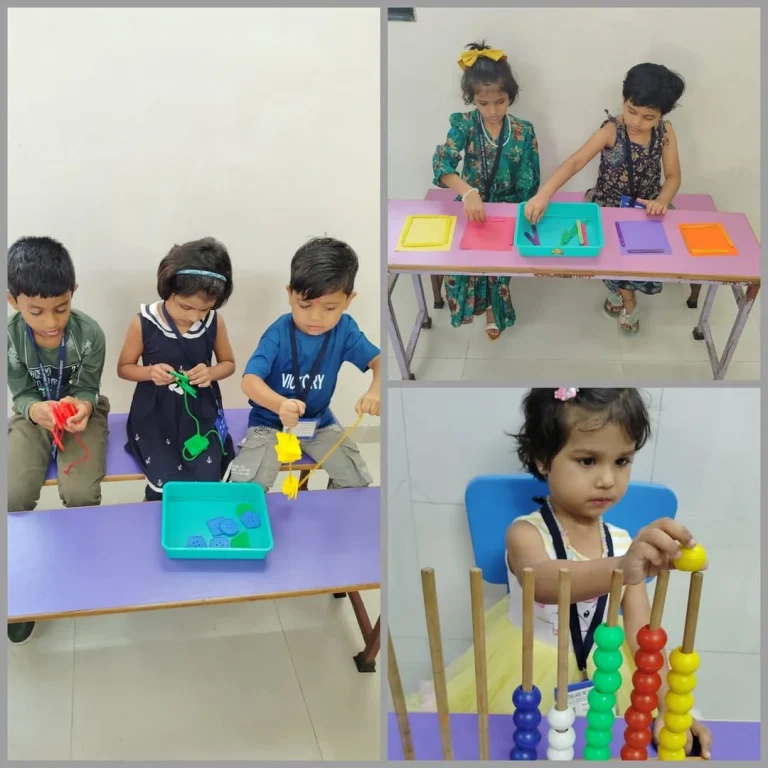
Phonics for Nursery is a clear and compassionate way to help young kids discover how letters and sounds are related. Kids learn best at this age by listening, repeating, and playing games that help them become more conscious of sounds.
Kids learn to read and speak early on and build confidence in recognizing sounds when they use Phonics for Nursery. A good start with Phonics for Nursery helps kids learn more words and gets them ready for school.
The Importance of Phonics in Early Learning
Phonics for Nursery is important for early learning because it teaches kids how letters and sounds go together. Kids in nursery school learn mostly by listening and repeating what they hear. Phonics helps kids learn naturally by teaching them to hear, recognize, and repeat letter sounds clearly. Kids start to grasp spoken words better when they can tell what sounds are.
Phonics also helps you listen better. Kids pay more attention to the sounds in words, which helps them understand what to do and do it right. Phonics for Nursery helps you remember things and stay focused, which makes learning easier.
A good understanding of phonics helps kids learn to read and talk early on. Kids learn how to mix sounds to make simple words, which helps them feel more confident when they talk. Phonics for Nursery helps kids learn to say words clearly, see patterns in language, and get ready to read and write in later grades.
For additional information, please call or WhatsApp +918591021373 or +919082778593.
To get the brochure, Click Here!
Simple Phonics Activities for Nursery Children
When you make Phonics Activities for nursery kids that are appropriate for their age and attention span, they can be enjoyable and interesting. Kids may learn letter sounds organically and have fun doing it with activities that are right for their age.
Here are some fun ways to teach Phonics for Nursery:
Songs with Sounds
Singing songs that stress the sounds of letters is a great approach to teach phonics. Kids can clap, tap, or move to the beat while saying the sounds again. This makes it easier for them to remember letters and the sounds that go with them.
Matching Pictures
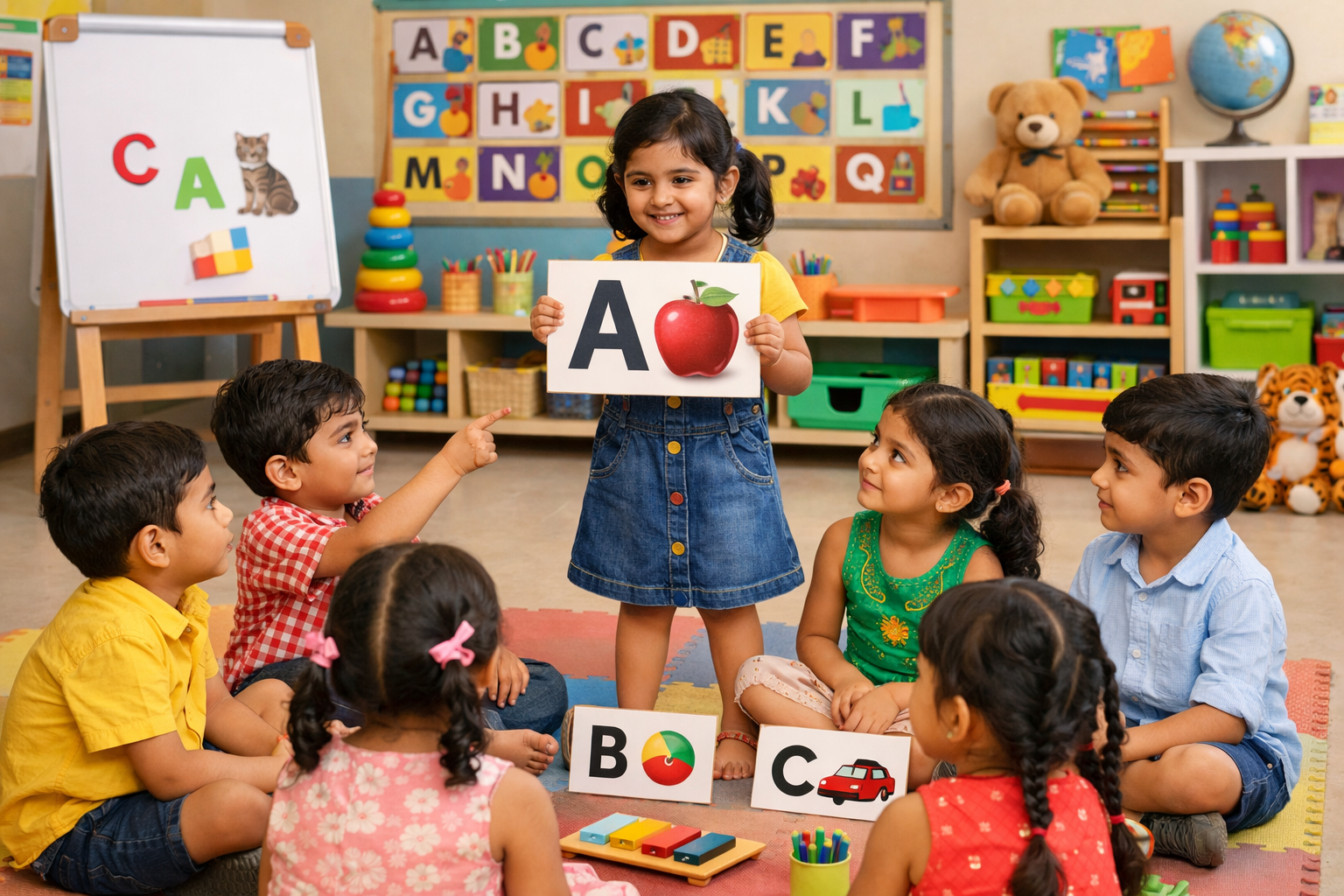
Putting visuals with letters or sounds helps people remember them. For instance, tying the letter “A” to a picture of an apple helps kids connect what they see with what they hear. This makes Phonics for Nursery learning real and easy to understand.
Chants and Rhymes
Simple chants and rhymes that focus on repeating sounds help people remember things and say them correctly. Kids like to say the lines over and again, which helps them learn how sounds work in words.
Learning by Doing
Adding movement, such jumping, clapping, or pointing while saying sounds, keeps kids interested and active. This multisensory method makes learning fun and memorable while reinforcing Phonics for Nursery ideas.
Children may learn a lot about sounds, make their speech clearer, and gain confidence in reading early on by doing these basic tasks on a daily basis. Phonics for Nursery is a fun aspect of daily learning for young learners since it combines hearing, speaking, and moving.
For additional information, please call or send a message to +918591021373 or +919082778593.
To get the brochure, Click Here!
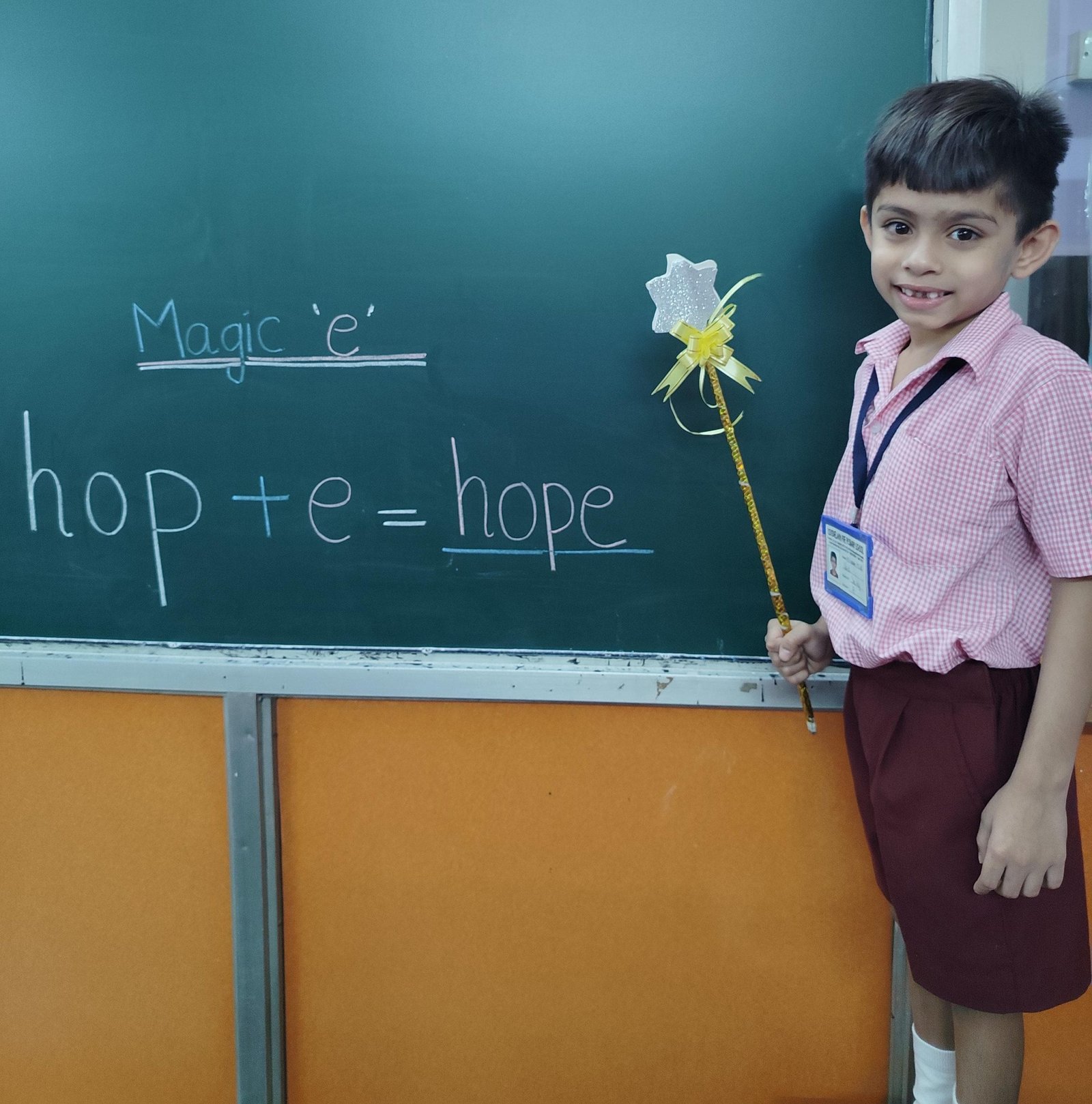
What Parents and Teachers Do to Help Kids Learn Phonics
Adults are very important for helping kids learn Phonics for Nursery. Children feel more secure and motivated to learn about letter sounds and words when they have regular support, practice, and encouragement. Both parents and instructors make learning entertaining, engaging, and useful, which helps kids intuitively understand phonetic ideas.
Here are some good ways for adults to help Phonics for Nursery:
Practice regularly:
Doing basic activities, saying letter sounds, and words over and over again helps kids keep their phonics skills. Structured practice in the classroom and short daily sessions at home help reinforce what you’ve learned.
Positive Encouragement:
Giving kids praise for their efforts, celebrating little wins, and gently helping them learn from their mistakes all boost their confidence and keep them interested in participating.
Learning through play:
Phonics for Nursery is fun because it gets kids involved in songs, rhymes, and games that use sounds. Parents and teachers can both help make learning fun and memorable.
Repetition in Different Places:
Kids learn better when they hear the same noises at home and at school. Reinforcing things in the same way over and over again makes it easier for kids to relate sounds to letters and words.
Modeling Correct Sounds:
Adults who speak clearly and deliberately are effective role models because they assist kids learn how to say words correctly by imitating them.
Teachers and parents can make Phonics for Nursery learning more effective, fun, and meaningful by working together. This lays a strong foundation for reading and communication abilities in the early years.
Getting your kid started with Phonics for Nursery early can have a big impact on how well they read and speak. Kids get better at detecting sounds and putting words together when they practice often, do engaging things, and get help from experts. Divineland’s specialized Phonics Classes are a great way to help your child get off to a good start in learning phonics. These sessions are meant to make learning fun, useful, and helpful, which will help kids create a firm base for reading and talking.
Sign up for Divineland’s Phonics Classes today to give your child a great start!
For additional information, please call or WhatsApp +918591021373 or +919082778593.
Click Here to get the brochure!
FAQs
How may Phonics for Nursery be Good for My Child?
It helps kids learn to recognize sounds, pronounce words correctly, and feel good about reading at a young age. This gives them a strong base for future learning.
What Kinds of Things do Kids do in Nursery Phonics?
Some of the activities are rhymes, sound songs, picture matching, flashcards, and entertaining games that help kids learn letters and sounds in a pleasant way.