Colour Recognition Activities are a fun and practical way for little ones to learn to recognize, name and distinguish colors. Learning colors is a crucial part of early infant development since it promotes observation, memory, visual abilities, and communication. Children will find learning colours more enjoyable through simple games, sorting jobs, matching exercises, art and daily things.
Colour Recognition Activities can be used by parents and instructors to encourage active involvement and assist youngsters learn colors in a natural way via play and practice in their daily life.
Colour Sorting Activity
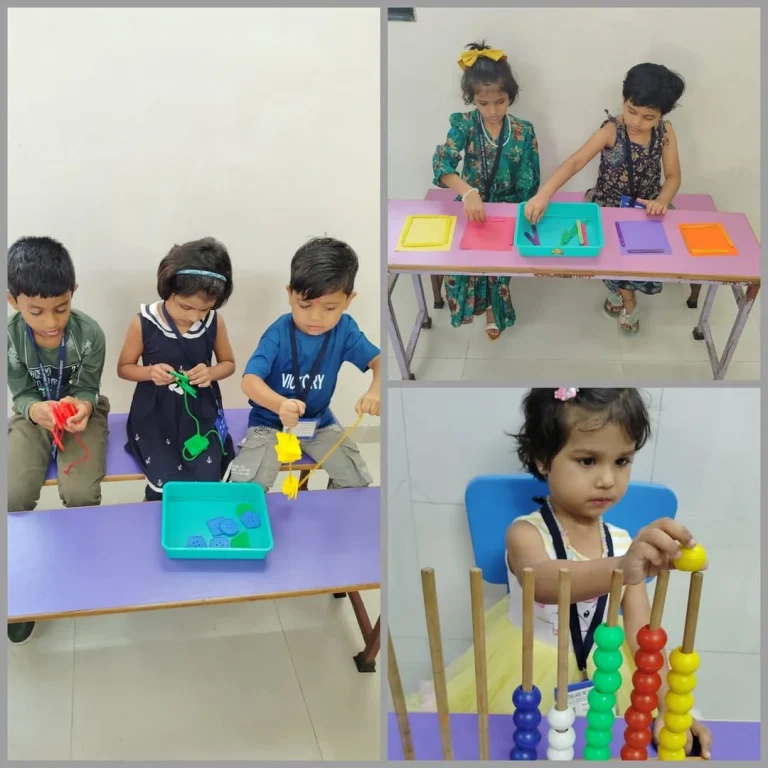
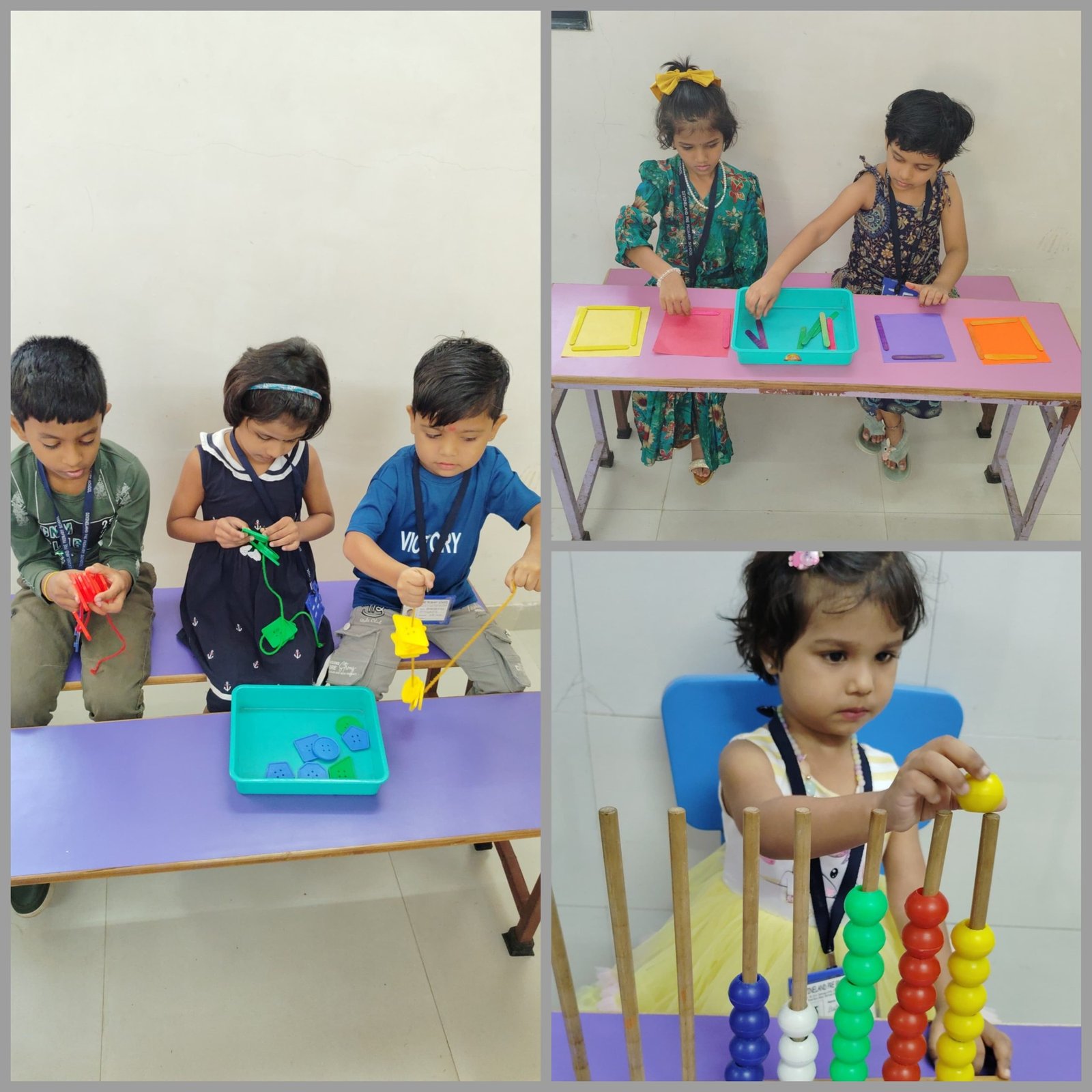
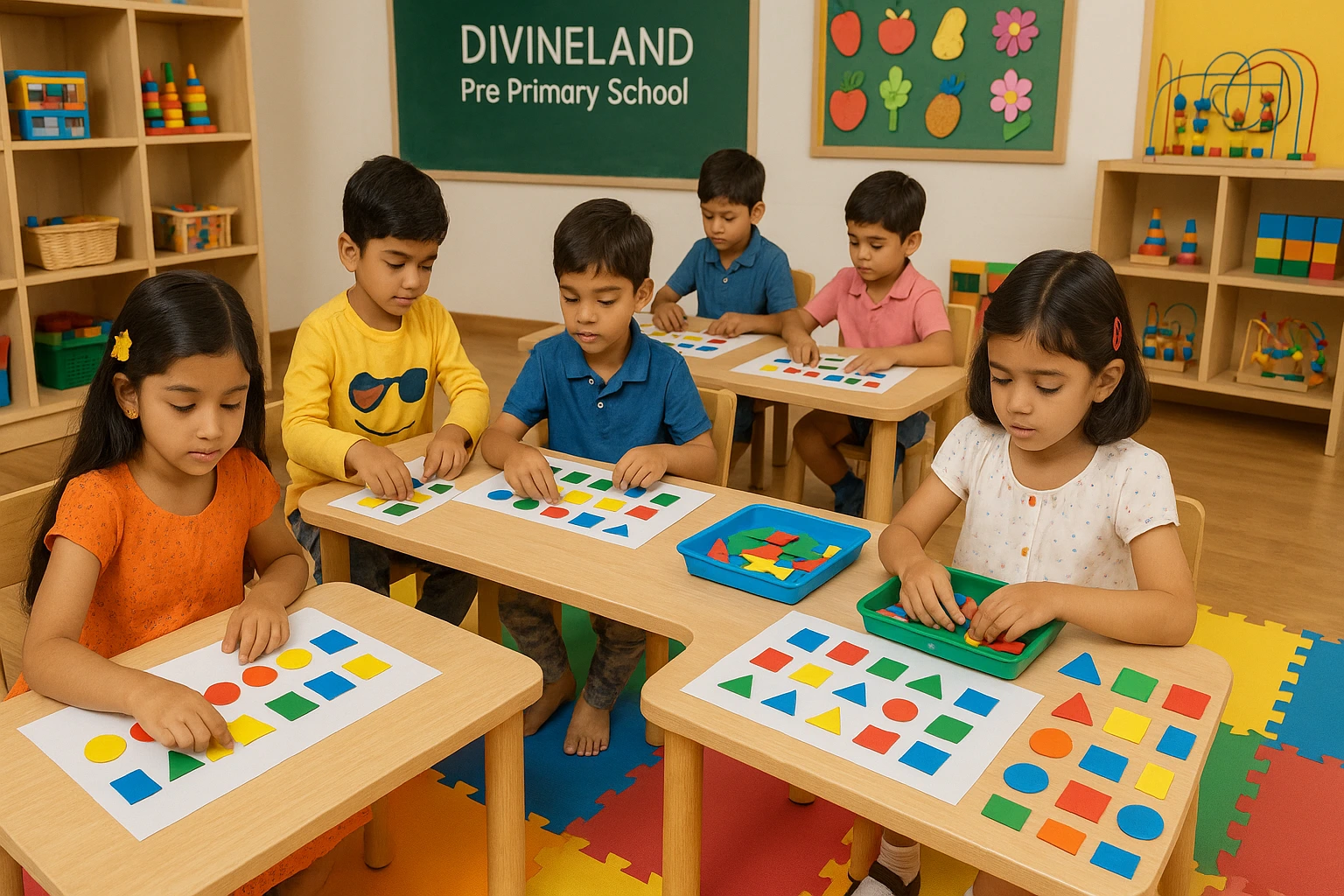
One of the easiest ways to assist children learn to recognize and classify colors is through colour sorting. Give the children a collection of brightly coloured objects such as buttons, blocks, bottle caps, pom-poms or beads. Provide a number of bowls or containers in different colors and ask them to place each object in the corresponding container.
For instance, red objects should go into the red bowl, blue stuff into the blue bowl. Sort the colors and ask the children to speak each colour name out. Colour Recognition Activities will keep children occupied and will help build their colour recognition, focus, hand-eye coordination, logical thinking and fine motor abilities.
Reserve Your Child’s Seat, Call or Whatsapp on +919082778593 / +918591021373 Today!
Click Here, to download the brochure!
Colour Matching Cards
Colour matching cards are a fun way to teach kids colors and how to locate similar colors. Make cards from colored paper or print simple cards in red, yellow, blue, green, orange, purple, pink and other colors. Put one set of cards on the table and hand the child the other set of cards. Have the youngster match each card with the same colour.
Teachers can also use photos of objects such as a red apple, a yellow banana or a green leaf. Then the children match these photos with the correct colour card. This activity helps to develop memory, observation, focus and visual discrimination.
Colour Treasure Hunt
A colour treasure hunt is a fun movement activity to learn about colors. Choose a colour, for example red, and have the students search the classroom or house for items of that colour. They might find a red pencil, a toy, a book, a bag or a ball. Give youngsters different colors to look at after they have understood the exercise. Teachers can also split youngsters into small groups and give each group a colour.
Get children to name everything they see. This game helps youngsters to develop their colour recognition, observation, language, communication and problem solving skills and encourages them to recognize colors in their everyday environment.
Rainbow Colour Activity
Making a rainbow is a unique Method to Teach kids numerous colors at once. Give youngsters a sheet with a simple outline of a rainbow and some crayons, colored pencils, paints or paper strips. Show them the order of the usual rainbow colors and guide them to fill in each section. Teachers can say the name of each colour as children use it and urge them to repeat the word.
Children can also stick colored paper, cotton or craft objects onto the rainbow. This game promotes youngsters to recall colour names, develop fine motor skills, be creative and realize that colors might come in a certain order or pattern.
Colour Mixing with Paint
Mixing colors allows children to grasp how to make new colors from fundamental colors. Bring red, yellow and blue paint and small pots, brushes or spoons. Get children to combine two colors at a time and see what happens. For example, red + yellow becomes orange. Blue + yellow = green. Encourage children to estimate what colour might occur before mixing the paints.
Teachers might talk about the distinction between the original colors and the newly generated colors. This practice encourages curiosity, observation, creative thinking and early scientific comprehension. It also makes learning colour hands-on because the children can observe the changes happening directly.
Colour Collage Activity
A colour collage is a fun art exercise that allows youngsters to learn colors and develop creative skills. Give each child a piece of paper and choose one colour. Bring old magazines, newspapers, colored paper, stickers, ribbons or crafting supplies. Ask children to look for and cut/tear the items of the specified colour and stick on the sheet.
For example, a yellow collage can include photographs of bananas, sunflowers, lemons, and yellow apparel. Teachers can discuss each picture while the youngsters are working. This practice develops colour recognition, vocabulary, fine motor abilities, focus, imagination and visual awareness.
Colour Hop Game
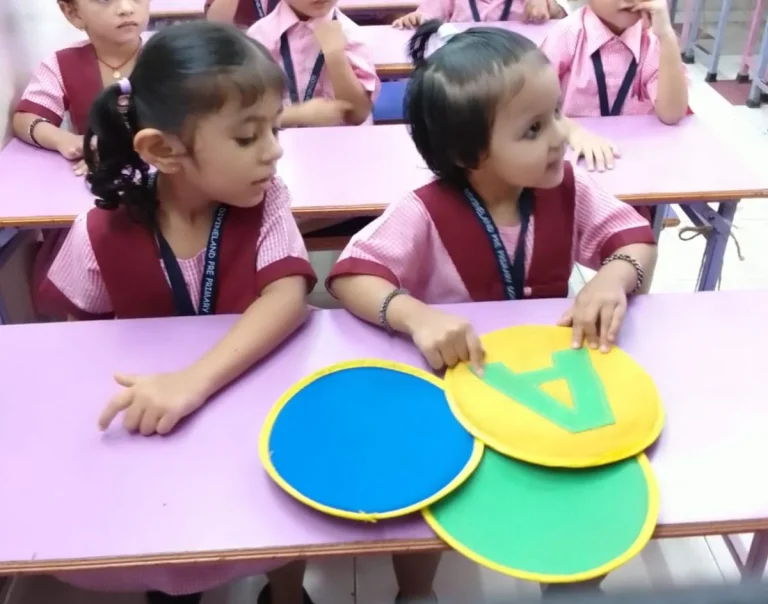
The colour hop game is a way of combining physical exercise with learning colors. Place huge sheets or circles of different colors on the floor of the classroom. Call out a colour and instruct the children to jump, hop or walk to the correct colour sheet. Teachers can spice up this game by offering basic instructions like “Hop to blue”, “Stand on yellow” or “Touch green”.
Children could also have turns calling out colors for their classmates. This practice allows youngsters to identify colors rapidly and build listening skills, balance, coordination, attention and confidence. This is especially excellent for active students who like to learn through movement.
Reserve Your Child’s Seat, Call or Whatsapp on +919082778593 / +918591021373 Today!
Click Here, to download the brochure!
Colouring Everyday Objects
Children can relate colors to everyday objects by colouring familiar things. Provide children with easy worksheets of fruits, vegetables, animals, flowers, automobiles and other everyday objects. Ask children to colour each picture in an appropriate colour, for example, green for leaves, yellow for bananas or orange for carrots. Teachers can also choose creatively and ask the youngsters why they choose a particular colour.
Encourage children to name the colour before they use it. This colour recognition activities promotes the development of colour awareness, pencil control, focus, imagination, vocabulary and fine motor abilities. It also allows children to correlate colors with real items and experiences.
Colour Pattern Activity
The colour patterns help youngsters develop early mathematical reasoning and learn to recognize colors. Create a basic pattern like red-blue-red-blue with colored blocks, beads, paper shapes, or buttons. Ask the youngster to look at the sequence and to continue it. Once youngsters are comfortable, you could want to introduce patterns like yellow-green-green-yellow-green-green.
Teachers might ask youngsters to name the colors as they arrange the objects. Kids can even make their own patterns for classmates to finish. This task is great for Colour Recognition, Memory, Concentration, Sequencing, Logical Thinking, and Problem Solving Skills. It also introduces toddlers to the basic idea of repetition and order through colors.
Colour Day Activity
Colour Day can be a fun and memorable way to teach preschool children colour awareness. Choose a colour for the day and have children wear clothing, bring objects or use school supplies that correspond to the colour. For example, on Red Day youngsters may bring a red toy, fruit, ribbon or book. Teachers can plan stories, songs, sketching activities, sorting games and craft activity based on the colour chosen. The children can also find objects around them that relate to the theme.
This colour recognition activities gives youngsters regular exposure to a colour which helps them remember it readily. It also enhances language, observation, social interaction and communication abilities.
Colour recognition activities are great for early learning and fun too! They help with observation, memory, creativity and thinking skills. Children at Divineland Pre Primary School learn via interesting activities, play way and practical experiences. Parents who are looking for a loving and activity centred learning atmosphere can enrol their child at Divineland Pre Primary School to give them a strong educational foundation.
Make colours fun—enrol your child at Divineland Pre Primary School today!
Reserve Your Child’s Seat, Call or Whatsapp on +919082778593 / +918591021373 Today!
Click Here, to download the brochure!
Colour Recognition Activities
FAQs
How do Colour Recognition Activities Help Preschoolers?
Colour exercises help develop observation, memory, vocabulary, visual discrimination and cognitive skills, making early learning more fun and participatory.
How does Divineland Pre Primary School Teach Colour Recognition?
Divineland Pre Primary School combines activities, games, art, objects and classroom objectives to teach the children to recognize colors with confidence.